By VALOR Class VIII Fellow: Mark Sutphin, Extension Agent, Virginia Cooperative Extension – Frederick County
What connects a jar of peanut butter, a cotton shirt, a package of bacon, and a bag of potato chips? During Session Two of the Virginia Agriculture Leaders Obtaining Results (VALOR) Class VIII program, we discovered the answer is far more complex than most people realize.
Over four days, our class traveled across southeastern Virginia and Virginia’s Eastern Shore, gaining firsthand insight into the people, businesses, and systems that drive some of the Commonwealth’s most important agricultural industries. From peanuts and cotton to pork and potatoes, the experience reinforced a key leadership lesson: agriculture succeeds because of relationships, collaboration, and a deep understanding of the entire value chain.
Day One: From Field to Finished Product
Our session began in Franklin and Wakefield with a focus on Virginia’s peanut industry.
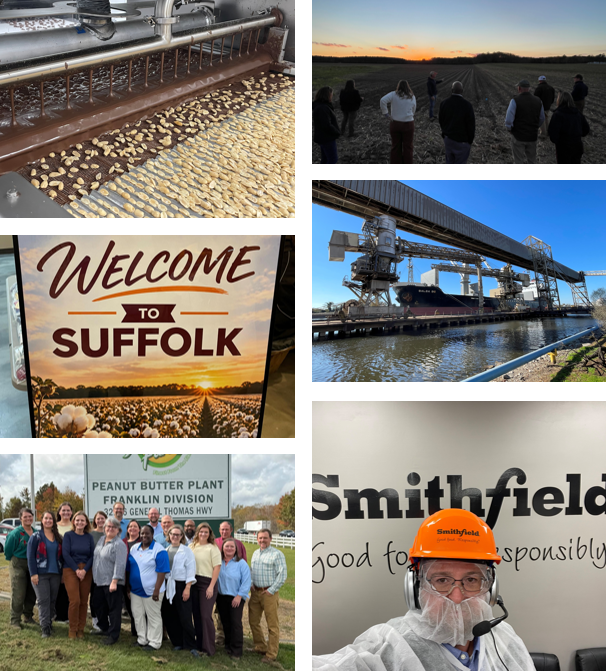
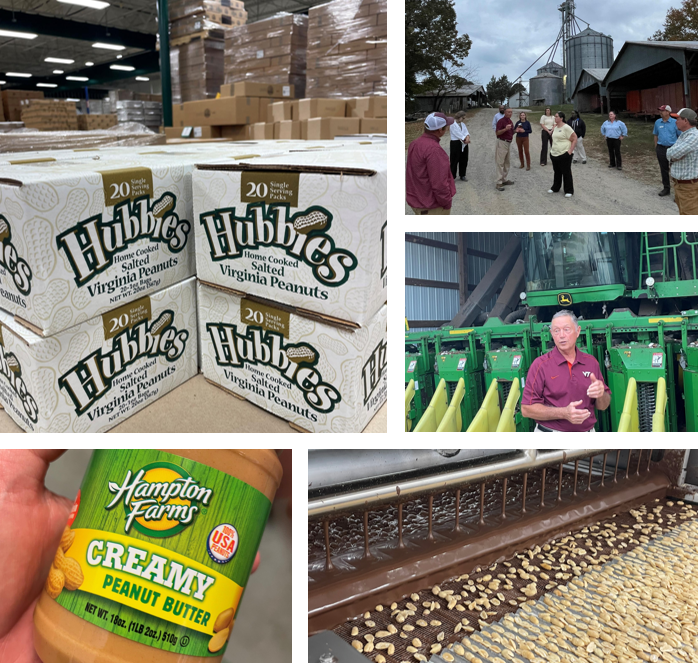
At Hampton Farms, we toured a peanut butter manufacturing facility and learned how food safety serves as the foundation of consumer trust. The precision and attention to detail required throughout the manufacturing process highlighted the responsibility agricultural businesses have in delivering safe, high-quality products to consumers.
At Hubbard Peanut Company, we experienced a very different side of the peanut industry. Known for its premium Virginia peanuts and specialty gift products, Hub’s demonstrated how value-added agriculture creates opportunities for growth and brand development within a multi-generational family business. Although the company has grown significantly since its founding in 1954, it continues to reflect the same community values established by its founding generation. The aroma of freshly roasted peanuts being coated in chocolate served as a reminder that agriculture is about more than production. It is also about creating products and experiences that consumers enjoy and remember.
The day concluded with a visit to Rogers’ Farms, where Paul Rogers Jr., a longtime supporter of VALOR, shared insights from managing a large row crop operation producing cotton, peanuts, corn, and soybeans. His perspective illustrated the challenges and opportunities facing modern agriculture, from weather and markets to technology and stewardship. Equally evident was his deep commitment to family and community. Throughout our conversations, Paul spoke about the importance of family transition, long-term sustainability, and ensuring that future generations have the opportunity to continue the farm’s legacy. It was a powerful example of leadership grounded in service, stewardship, and community engagement.
Day Two: Innovation, Processing, and Industry Connections
The second day highlighted the scale and sophistication of agricultural processing and marketing.
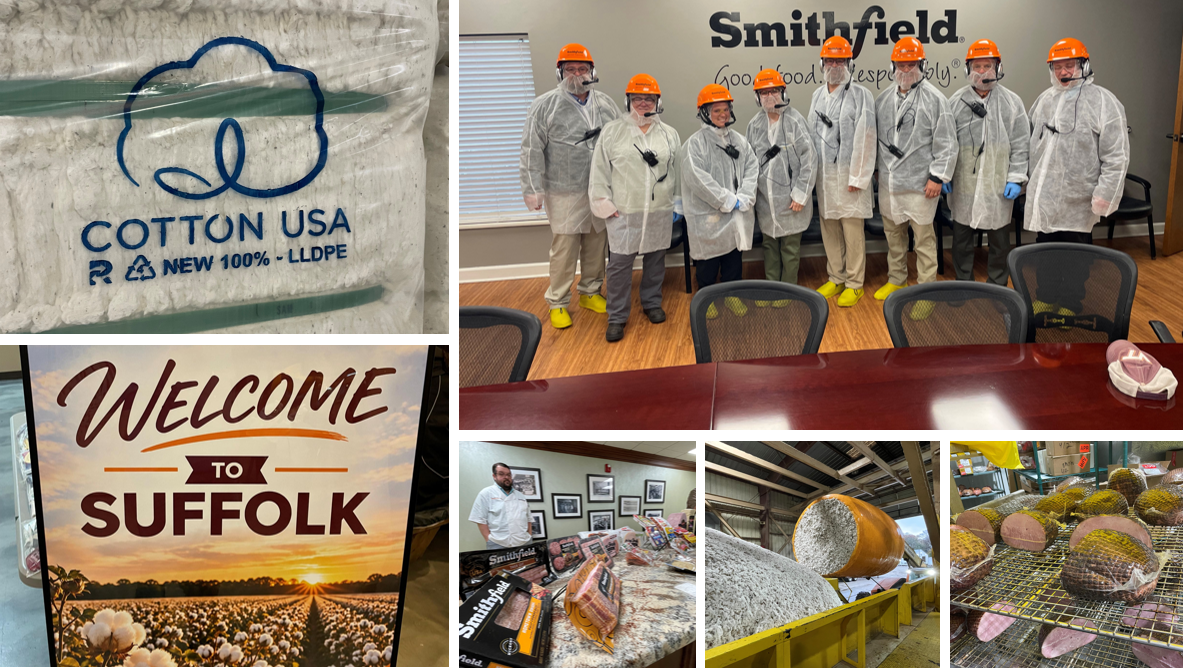
At Smithfield Foods, we gained a behind-the-scenes look at multiple aspects of the pork industry. Discussions with Richard in the Innovation Center explored product development and research efforts designed to meet changing regulations and consumer preferences. Conversations with Stefanie, a VALOR Class IV alumnus, and Ray focused on sustainability initiatives and government relations, demonstrating how agricultural companies engage with policymakers, consumers, and stakeholders. Finally, a tour with Omayra, permeated with the smell of bacon smoking, provided a close-up view of the immense scale of pork processing operations and the logistics required to move products from farms to dinner tables around the world.
Later, at Commonwealth Cotton Gin, the Alphin family shared the vital role their business plays in supporting cotton producers throughout the region. Seeing the cotton ginning process firsthand, for the first time, reinforced the importance of agricultural infrastructure and the many businesses that support production agriculture beyond the farm gate.
The evening concluded with a dinner at Nansemond Brewing Station alongside VALOR alumni. These conversations offered incredibly valuable experiences to connect with previous class fellows. Hearing how others have applied their leadership development and maintained relationships across sectors reinforced one of VALOR’s greatest strengths: building a network of leaders committed to the future of Virginia agriculture.
Day Three: Agriculture’s Global Reach
The third day broadened our understanding of how agricultural products move through domestic and international markets.
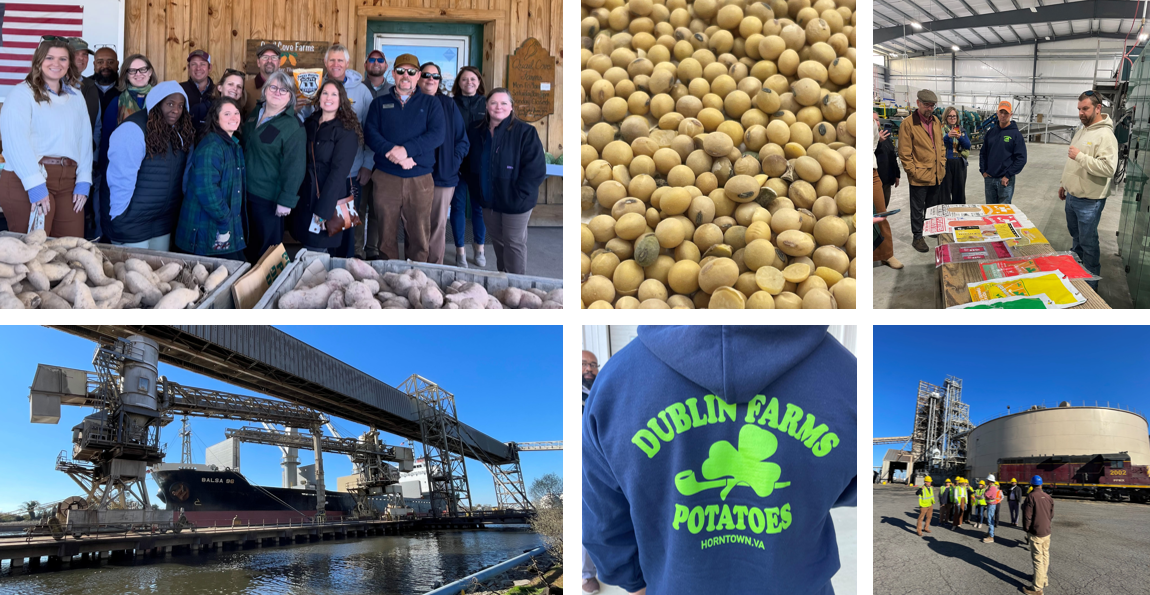
At Perdue Agribusiness’s Deep-Water Port in Chesapeake, we learned about the coordination required to move grain and feed ingredients efficiently by rail, truck, and vessel. As the only deep-water grain port east of the Mississippi River, the facility serves as a critical connection between agricultural producers and global customers. The visit underscored the importance of logistics, transportation infrastructure, and market access to the success of modern agriculture.
After crossing the Chesapeake Bay Bridge-Tunnel, our class arrived on Virginia’s Eastern Shore, where agriculture remains a driving force in local economies.
At Quail Cove Farms, we learned about the operation’s roadside farm market and sweet potato production, including supplying sweet potatoes used in Route 11 Potato Chips. The visit highlighted how farms can diversify their operations, capture value through direct marketing, and build meaningful connections with consumers.
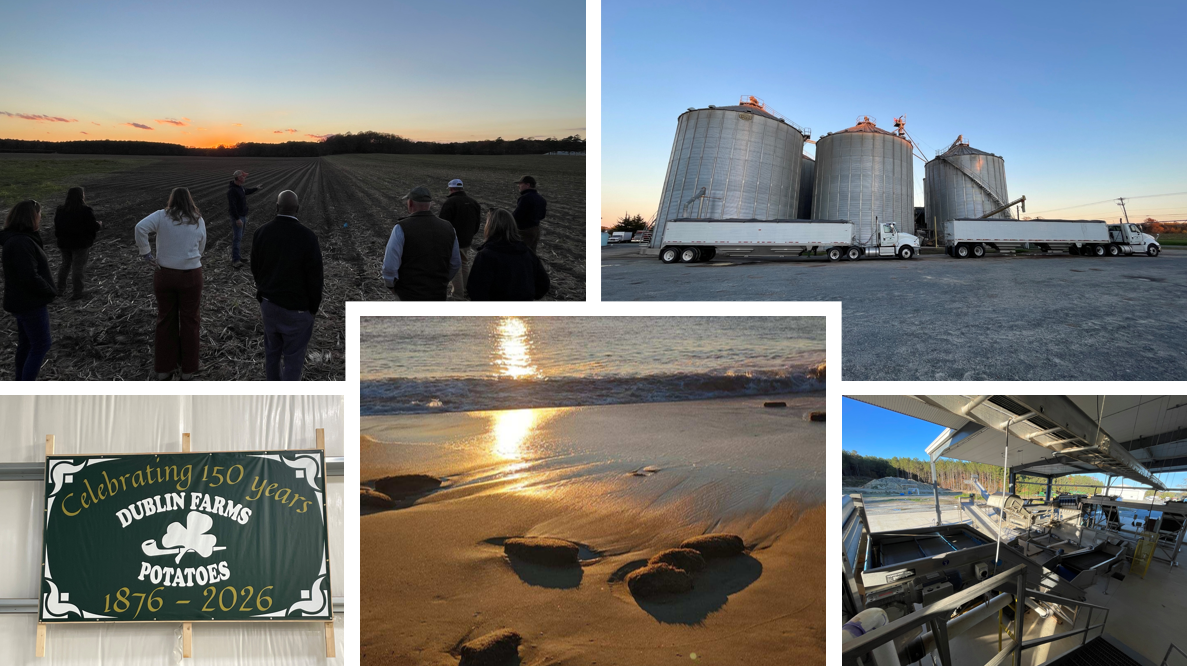
Our final farm visit took us to Dublin Farms, where the Hickman family shared the history and evolution of their farming operation. For more than 150 years, the family has adapted to changing conditions while maintaining a strong commitment to agriculture. Today, the farm manages approximately 7,500 acres and produces potatoes, green beans, corn, soybeans, and wheat. Their story demonstrated the importance of long-term vision, adaptability, and stewardship in sustaining agricultural businesses across generations. Their extensive involvement and leadership in local, state, and national agricultural organizations further illustrated the importance of engagement beyond the farm gate to help shape the future of the industry.
Day Four: Leadership in a Complex Agricultural Landscape
The final day in Chincoteague provided an opportunity to reflect on what we had learned throughout the session.
Class discussions centered on several issues that surfaced repeatedly during our travels, including labor availability, workforce expectations, land-use pressures, conservation practices, sustainability efforts, and the role of government policies in shaping agricultural decisions. While these topics often present significant challenges, they also highlighted the importance of informed and collaborative leadership.
One of the strongest themes from Session Two was the realization that no segment of agriculture operates independently. Farmers, processors, manufacturers, transportation providers, retailers, policymakers, and consumers all play a role in the agricultural system. Understanding those connections is essential for anyone seeking to lead within the industry.
VALOR’s mission is to develop leaders who can engage all segments of Virginia agriculture to create collaborative solutions and promote the industry both within and beyond agriculture. Session Two brought that mission to life. Whether standing among peanut processing equipment in Wakefield, touring pork innovation facilities in Smithfield, observing cotton infrastructure in Windsor, or learning about large-scale potato production on the Eastern Shore, we saw firsthand how diverse Virginia agriculture truly is. More importantly, we saw how interconnected it has become.
As VALOR Class VIII, or “V8” as we like to call ourselves, continues its journey, Session Two serves as a reminder that effective leadership begins with understanding, listening, and building relationships across all sectors of agriculture. We carry forward a deeper understanding of Virginia agriculture and a renewed commitment to working together for its future success.
From peanuts and cotton to pork and potatoes, the story of Virginia agriculture is ultimately a story of people, partnerships, and leadership. The future of Virginia agriculture depends not only on producing crops and livestock, but also on developing leaders who can navigate complexity, foster collaboration, and help shape a sustainable future for the industry.