

I have long believed that a university should be an asset to the community it is in. That belief has shaped my career, and it is a large part of what brought me to VALOR. I’m Omar Faison, Vice Provost for Research and Economic Development at Virginia State University and a member of VALOR Class VIII. I grew up in Emporia, Virginia, with farming on my father’s side of the family and a father whose work as an Extension agent connected him to farmers and rural communities. Agriculture was part of the world around me, and that background continues to influence how I think about the responsibilities of a university.
Today, much of my work involves helping people connect their knowledge and ideas with opportunities to put them to use. That might mean supporting a research project, bringing people from different disciplines together, or developing a partnership around a problem that matters to a community. I enjoy figuring out how the pieces fit together and what we could accomplish by connecting them more thoughtfully. In that context, agriculture gives me plenty to think about.
Our recent visits through Tidewater and the Eastern Shore brought together questions about technology, workforce, transportation, water, markets, and the future of family businesses. At Perdue Agribusiness, we were exposed to the constant coordination required to move grain among trains, storage facilities, processing operations, and ships. At Dublin Farms, a discussion of disease testing highlighted the impact when samples couldn’t reach a laboratory quickly enough for the results to guide decisions. Conversations like these made me think about how much depends on the connections between individual parts of an operation.
Those are the kinds of questions that draw me in. What is making the work difficult? What knowledge would help? Who needs to be involved? Where might a university contribute? Answering them well requires spending time with the people doing the work. I joined VALOR to develop a fuller understanding of agriculture across Virginia, hear how people make decisions under different conditions, and learn from experiences beyond my own. I also want to become better at recognizing where the capabilities of a university can connect with the priorities of agricultural and rural communities. I see possibilities across the university, in agriculture, the sciences, business, technology, education, and health. Understanding which connections would actually be useful starts with listening.
I’m also looking forward to learning from my classmates. We bring different experiences and perspectives, and our conversations have already given me reasons to reconsider assumptions and pursue questions I might otherwise have missed.
Over the next two years, I hope to understand more about the communities and enterprises we visit, become more thoughtful about how I lead, and bring what I learn back into my work. I’m grateful for the people willing to open their doors, explain their decisions, and let us learn alongside them. That is where I’m starting: with a belief in what universities can contribute, a lot of questions, and an interest in understanding where those contributions can matter most.
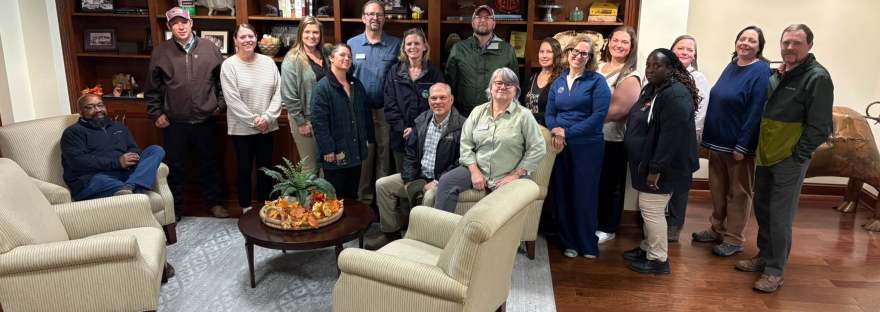
Introduction and Tidewater/Eastern Shore Reflections


