


Peanuts, pork, potatoes and Perdue. Discoveries along the Tidewater’s pork-and-peanut trail and Eastern Shore brought VALOR Class VII to ground-level with those iconic Virginia commodities, while offering a 10,000-foot view of their global impact.
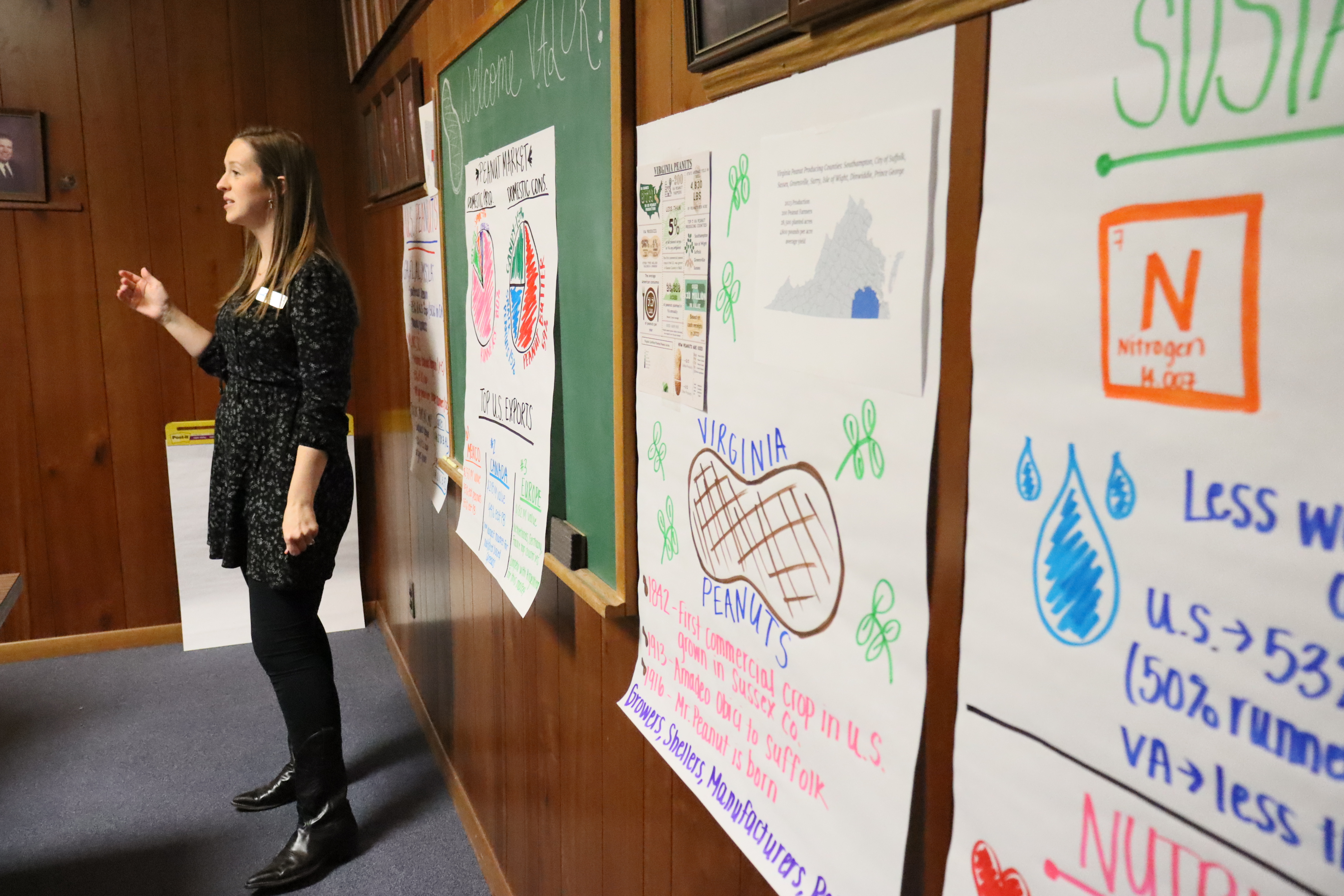
At our first stop along Virginia’s Salty Southern Route in November, we learned from industry professionals at the Virginia Peanut Growers Association about the history, cultivation and economic profile of the mighty peanut. Grown in eight counties, peanuts thrive in the Tidewater’s warm weather, sandy soils and flat fields. The Virginia-Carolina peanut is a large, ballpark-style snacking peanut, also exported to Mexico, Canada and the EU.
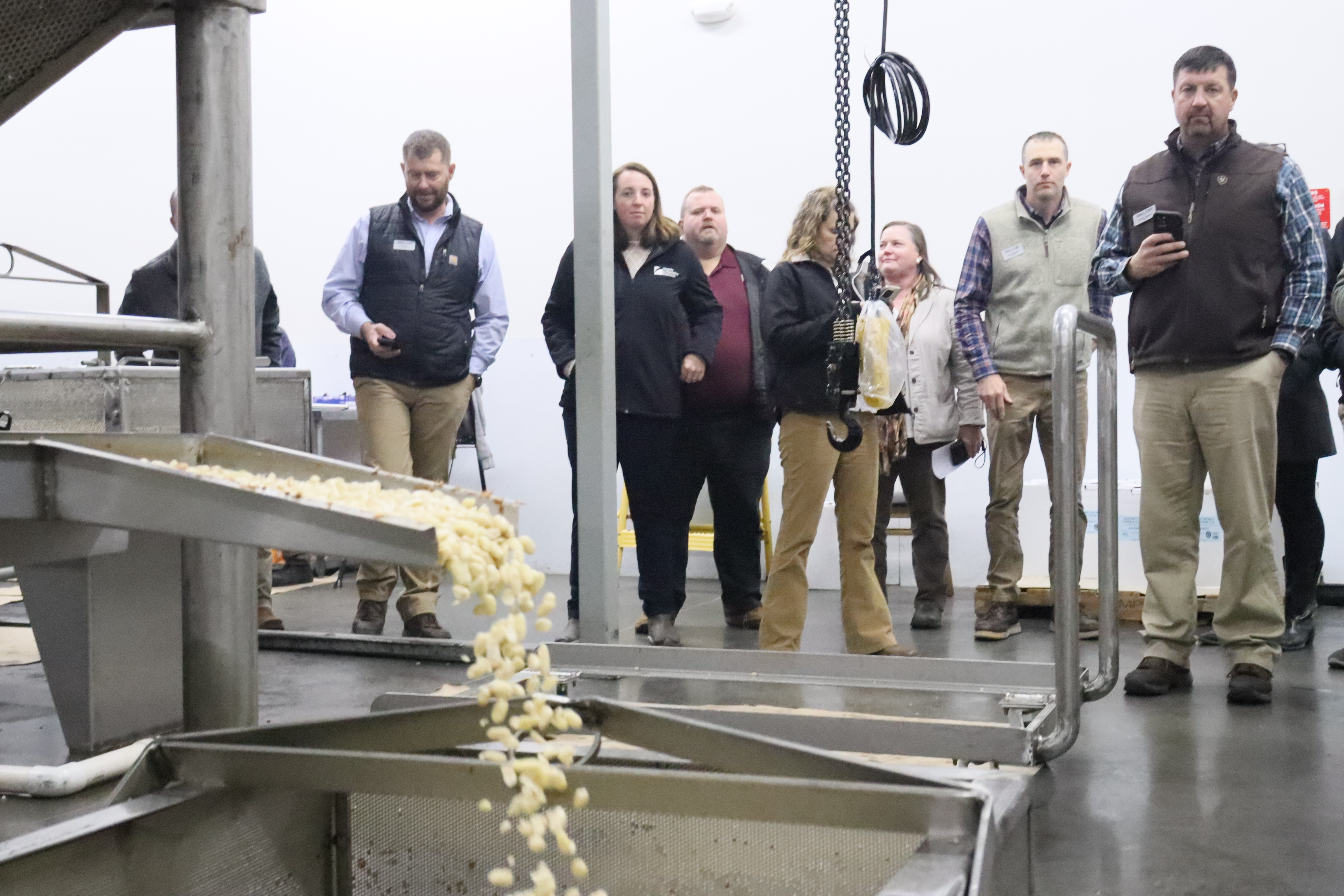
About 64,000 pounds of those peanuts are cooked at Belmont Peanuts in Courtland every week, with scores of flavors and private labels shipped throughout the U.S. and Canada from the facility. To attain the desired crunchy “blister,” peanuts are blanched and then fried in hot oil. Those peanuts end up on retail shelves including T.J. Maxx and Homegoods, and on the menu at Belmont’s gourmet deli.
Many of Belmont’s peanuts are sourced down the road from the buying facility Birdsong Peanuts. Birdsong contracts with regional growers for cleaning, grading and distribution to manufacturers worldwide, primarily for use in peanut butter and candy. Our class gaped at 23,000 tons of two varieties piled into mountains in a massive warehouse. The cold-storage facility has the capacity to store in-shell peanuts for over two years. Once shelled, peanut hulls have end-uses in poultry feed, fuel logs and landscaping.

VALOR fellows ate raw peanuts left over from the fall harvest at Rogers Farm in Surry County. Named Virginia Farmer of the Year in 2018, Paul Rogers Jr. hosted a tour of his sprawling operation and array of equipment used to produce peanuts, cotton and soybeans. His family treated us to dinner and lively conversation at their hunt club.

Virginia’s peanut growers rely on innovations and technical expertise that allow the legume to remain a sustainable crop. Up to 155 research projects are ongoing at the Tidewater Agricultural Research and Extension Center in Suffolk, which cultivates more land than any other Virginia AREC at 406 acres. VALOR fellows enjoyed a home-cooked meal and conversations with researchers who specialize in crop physiology, plant pathology, entomology, agronomy and precision agriculture.

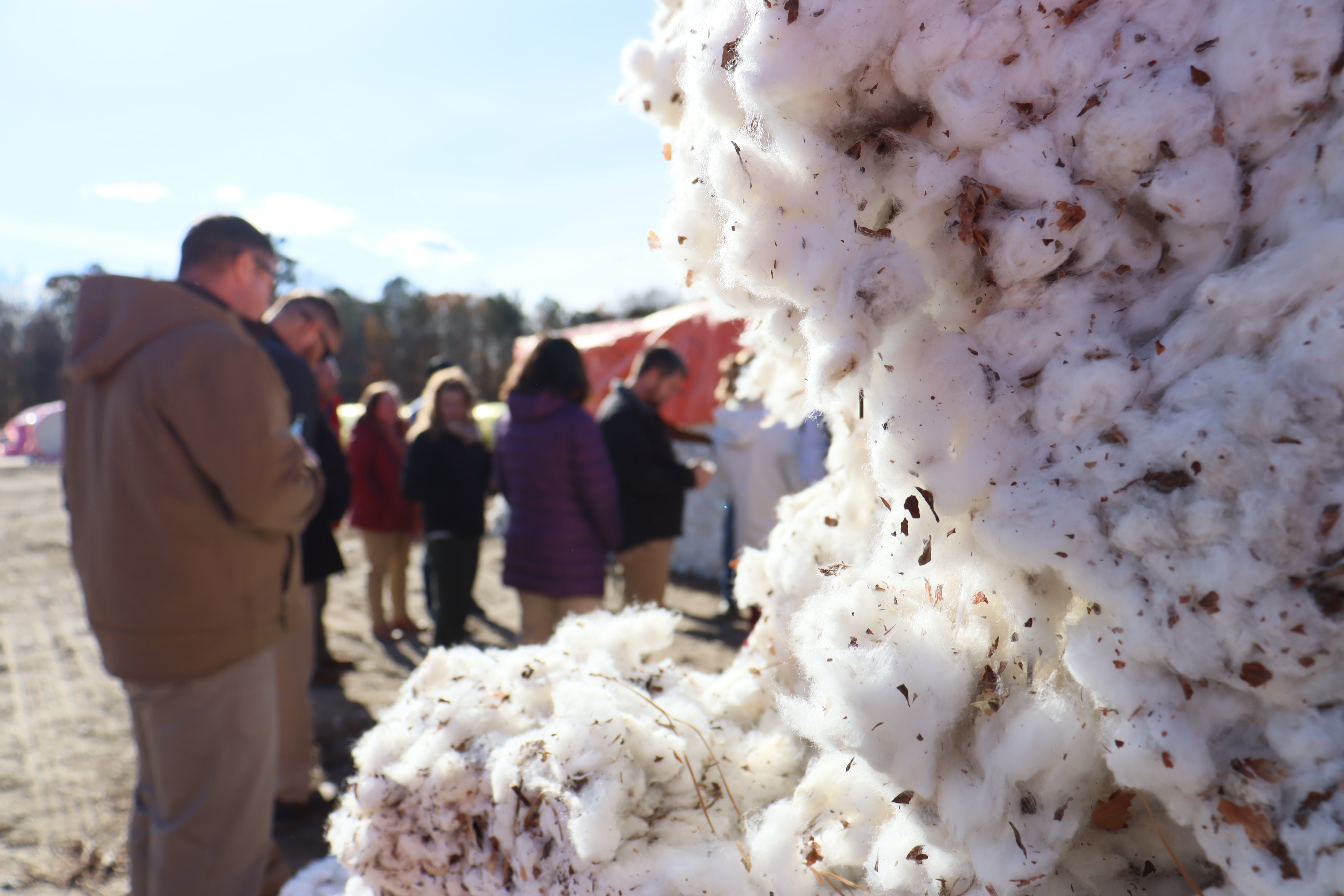
Their research also supports cotton growers who send round bales and 8-ton modules to Commonwealth Cotton Gin in Windsor for seed and lint cleaning. The U.S. produces the most sought-after fiber in the world, yet farmers currently see only 80 cents per pound compared to $1 in the past. However, cottonseed has its own market as a cooking oil. The 500-pound bags of clean cotton are shipped as far as India and China. Non-wearable cotton is used in bandages and gauze.
We visited Smithfield Food’s packing facility in the city that shares its name, where workers and “co-bots” processed bacon, pork loins, chops and more. Wearing protective gear, we weaved through the plant where they slice pork chops, smoke slabs of bacon and package protein products under multiple brand names. Company leaders said while a Chinese holding company owns Smithfield Foods, the sale opened more capital for infrastructure, and they are still operated locally.

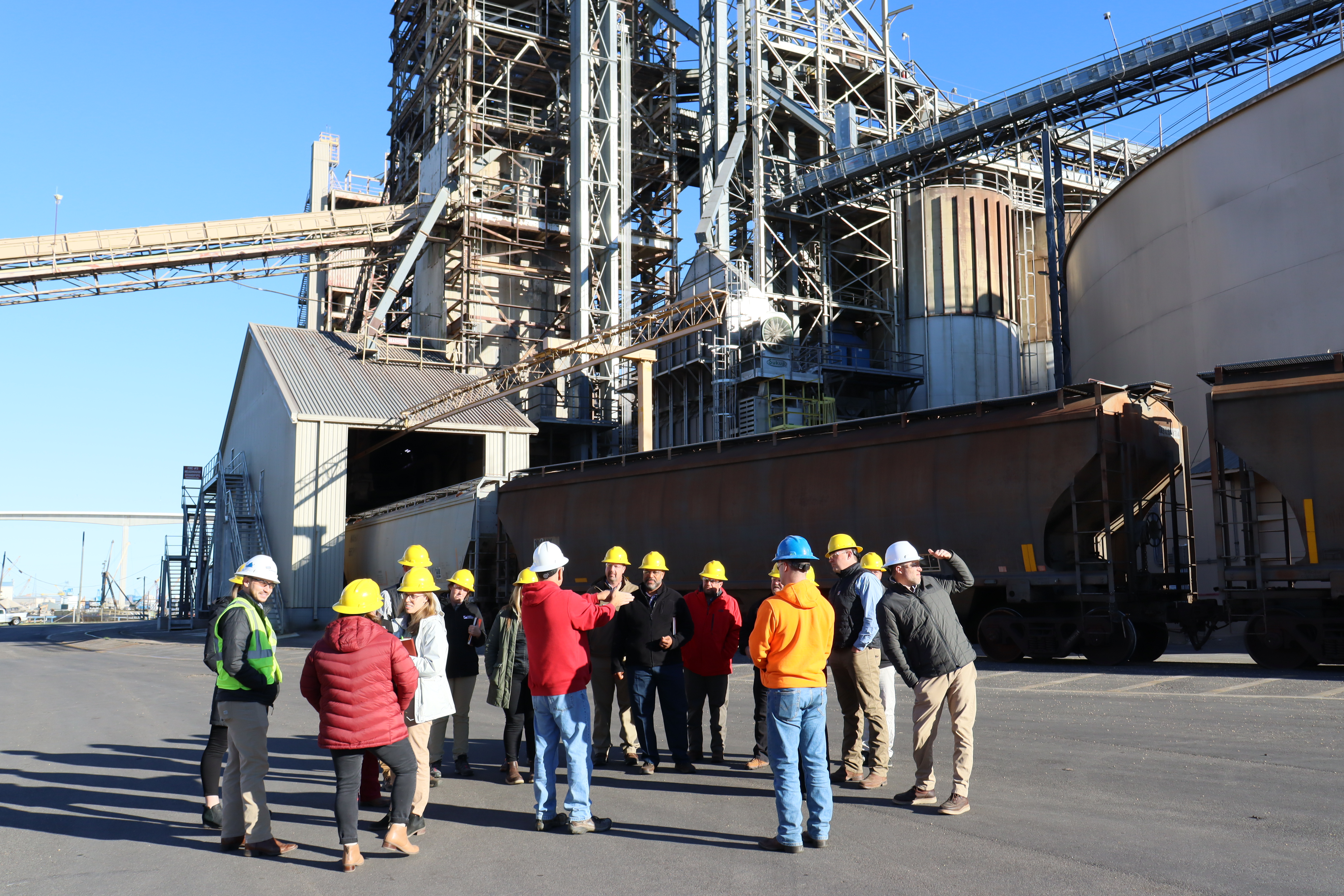
In an increasingly complex interconnected world of International agricultural trade, we marveled at the multitude of multimodal systems that make it happen. Perdue Agribusiness brings together grain trucks, barges and rail to load bulk vessels at its deepwater port in Chesapeake, while loading bulk containers that are sent to the Port of Virginia for international trade. Soybeans are Virginia’s largest export. Perdue’s crush facilities can crush, process and extract soybean oil, soybean meal, and soyhull pellets, used in cooking oil, biodiesels and livestock feed. It takes skilled merchandisers, logisticians and operation managers to keep corn, wheat, soybeans and soybean byproducts moving across the world—everywhere except Antarctica.
We digitally tracked ships leaving the port as we crossed the Chesapeake Bay Bridge-Tunnel bound for Virginia’s Eastern Shore. We visited Bill Jardine who farms organic produce and operates Quail Cove Organics farm and market in Machipongo. He shared his food philosophy and passion for organic growing practices, and discussed the challenges to cultivating crops without commonly used inputs. He treated us to homemade purple majesty sweet potato ice cream and goodie bags.

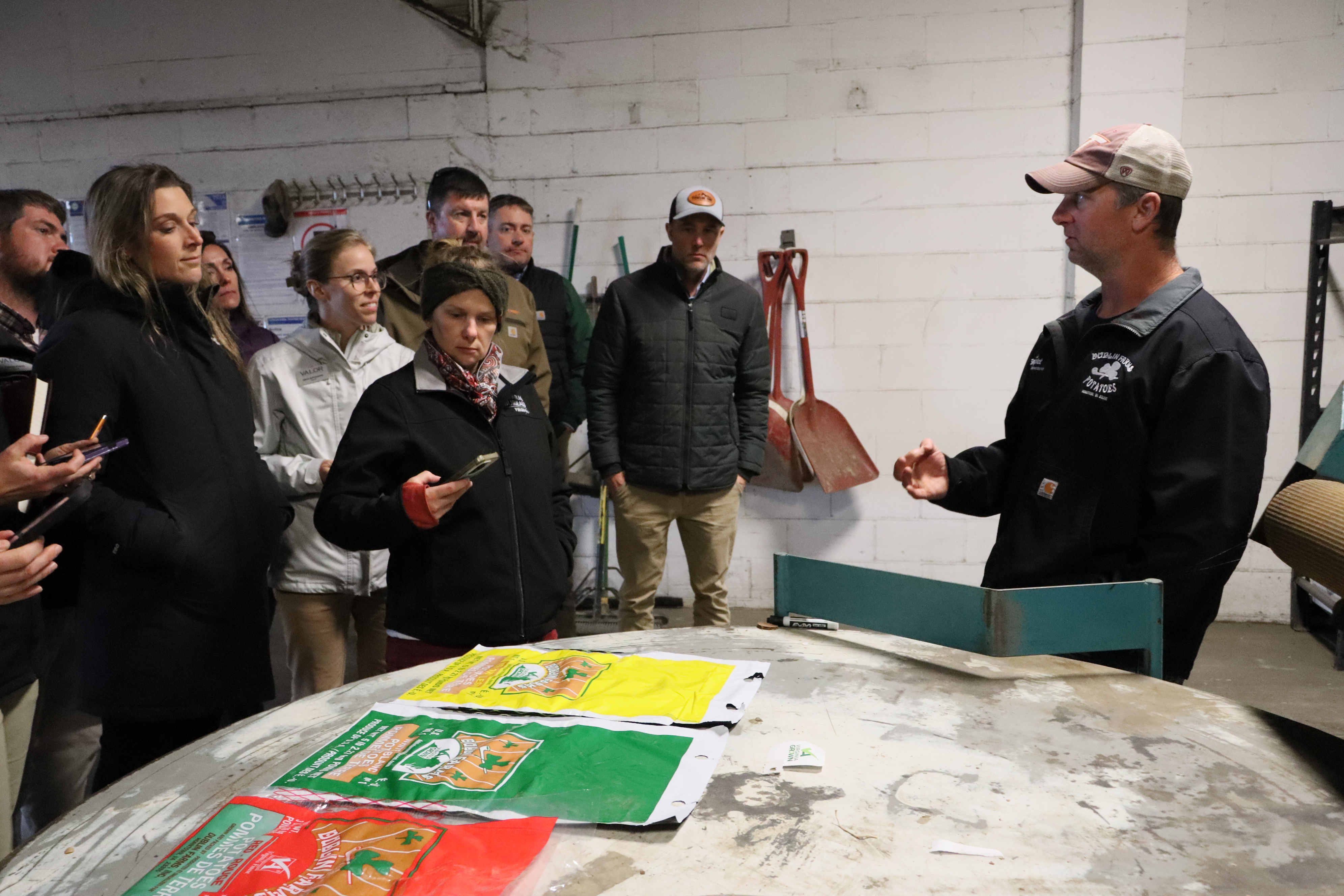
Further north in Accomack County, VALOR fellows visited Dublin Farms. Known for their red, white and yellow potatoes, the Hickman family’s tubers are distributed to grocery stores across Virginia and multiple states. During summer’s peak season, potatoes are washed, sorted, packaged and shipped within a day or two. Eighty percent of Virginia potatoes are grown on the Eastern Shore, with about half that acreage going to potato chips.
Next stop: Richmond in January!

 valeadersor.com