


During a recent state-level engagement we hosted in Suffolk with Virginia’s Secretary of Agriculture and Forestry, the event began with a few remarks from Mayor Mike Duman. Standing before a room of farmers, policymakers, and community leaders, he said,
It’s a true pleasure to welcome you all here today in the heart of Suffolk, where agriculture isn’t just part of our economy, it’s part of our identity.
It was a fitting and gracious opening, and in that moment, the mayor captured what makes Suffolk unique. Agriculture isn’t just an industry here; it’s part of our cultural DNA. But those words also come with responsibility. When leaders publicly define agriculture as central to our identity, we owe it to our community to make sure our economic decisions reflect that truth, not just in rhetoric, but in policy, planning, and land stewardship.

The challenge before us is simple: If agriculture truly shapes who we are, then every zoning vote, development proposal, and energy initiative must honor that identity rather than erode it.
As I have learned, an essential element of leadership, begins with listening. Not only to people, but to the places that shape them. For me, that place is Suffolk, Virginia. Here, agriculture threads through daily life in quiet but enduring ways. Our roads wind through peanut and cotton fields, and many backyards meet timber stands. Yet those same fields that symbolize stability are now at the center of a new kind of uncertainty.
Through VALOR, I’ve spent the past year exploring how leadership and stewardship intertwine. This experience has shown me how fragile the balance is between progress and preservation, and how easily one can swallow the other if we stop paying attention. That lesson is coming to life right here in Suffolk.
Policy, Common Sense, and the Solar Gold Rush
In 2020, Virginia enacted the Virginia Clean Economy Act (VCEA), a landmark law meant to drive the Commonwealth toward 100% carbon-free electricity by 2045. The intent was admirable: reduce emissions, stimulate innovation, and lead the way in renewable energy. The problem is/was, the framework of that law borrowed heavily from California’s environment model, and Virginia is not California.
California’s wide deserts are naturally suited for sprawling solar farms. Virginia, on the other hand, is built on forests, wetlands, and productive farmland – land that already sustains both our economy and our ecosystems. Agriculture and forestry make up a much larger part of Virginia’s economy, about 11% compared to California’s 3%, and in Tidewater especially, that connection to the land is still part of who we are.
In adopting a policy without accounting for those differences, we inadvertently set the stage for conflict between food and fuel, between fields and solar panels. Leadership requires more than imitation; it requires intentional measured action with purpose.
Since the VCEA took effect, Suffolk has seen a surge of speculative solar proposals. Developers, many from outside Virginia, are courting landowners with offers that seem irresistible, offering long-term leases at prices that far exceed traditional agricultural returns. For those facing tight margins or planning for retirement, the numbers can be persuasive.
But the consequences extend far beyond any single property. Once fertile farmland is converted to solar use, it leaves production for decades. It no longer contributes to Suffolk’s economy, food supply, or rural stability. It fragments landscapes, drives up land prices, and narrows opportunities for young farmers. Over the past 20 years, Suffolk has seen a reduction of nearly 20% of its productive agriculture lands. This is not progress rooted in sustainability. It’s extraction under a new banner.
Lessons from the Desert
One of the most revealing case studies in solar overreach lies 2,500 miles to our west in the Mojave Desert. The Ivanpah Solar Power Facility, once heralded as the world’s largest solar-thermal project, was built at a cost of $2.2 billion. It spanned more than 3,500 acres and was expected to power over 140,000 homes.
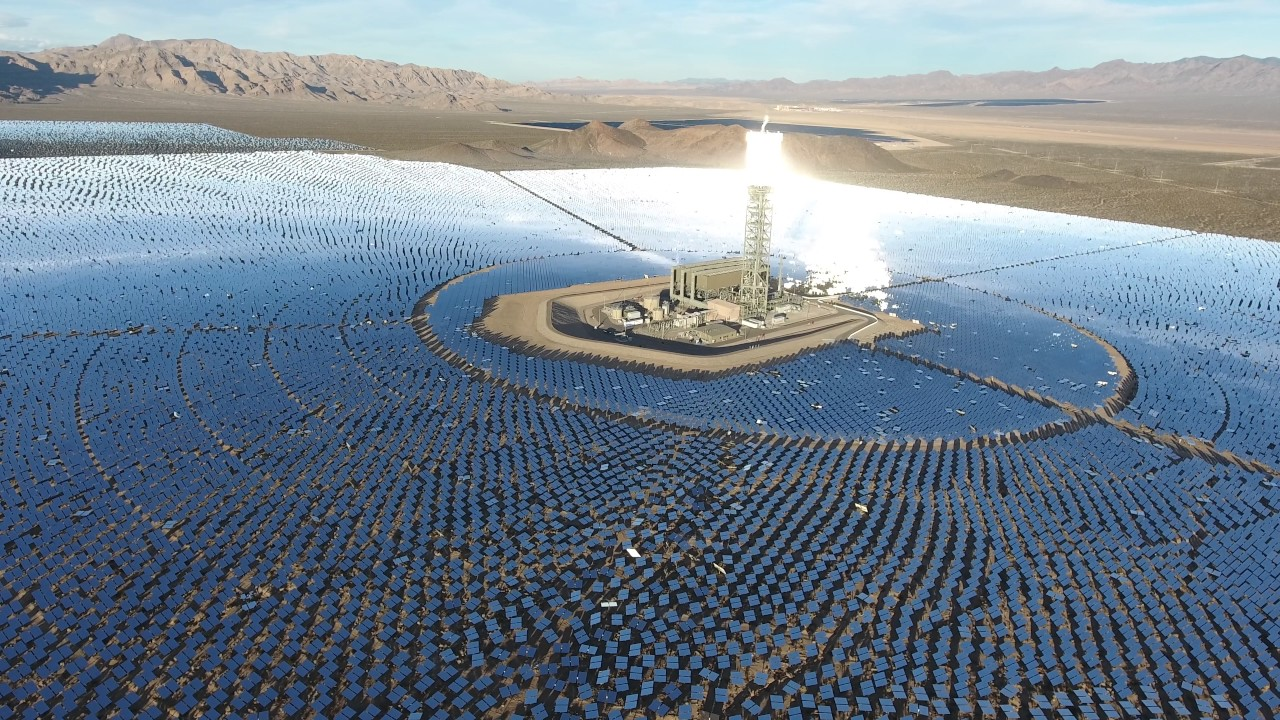
Today, much of Ivanpah stands as a cautionary tale. Despite ideal sunlight conditions, the facility never met its performance targets. It required natural gas to operate, suffered reliability issues, and caused unexpected environmental harm. After years of underperformance, the owners announced that large portions of the plant will be decommissioned beginning in 2026.
That story matters for us in Suffolk because it shows what happens when policy ambition outpaces practical understanding. If a $2.2-billion facility in one of the brightest, driest climates on Earth cannot sustain itself, what hope does a patchwork of solar fields have on Virginia’s fertile, moisture-rich farmland?Leadership is not about repeating others’ mistakes faster. It’s about learning from them sooner.
Physics and the Human Side of the Ledger
Solar energy is inherently land-hungry. Even under optimal conditions, one square yard of sunlight provides less than a kilowatt-hour of usable electricity per day. To power a single home for a year, thousands of square yards must be covered in panels. In Suffolk, the math becomes even more sobering. Our average of 4.5–5 peak sun hours a day is respectable, but it still means vast tracts of land are required to produce modest returns. Meanwhile, each of those tracts currently supports the kind of photosynthesis that keeps us alive, food, fiber, and open space.
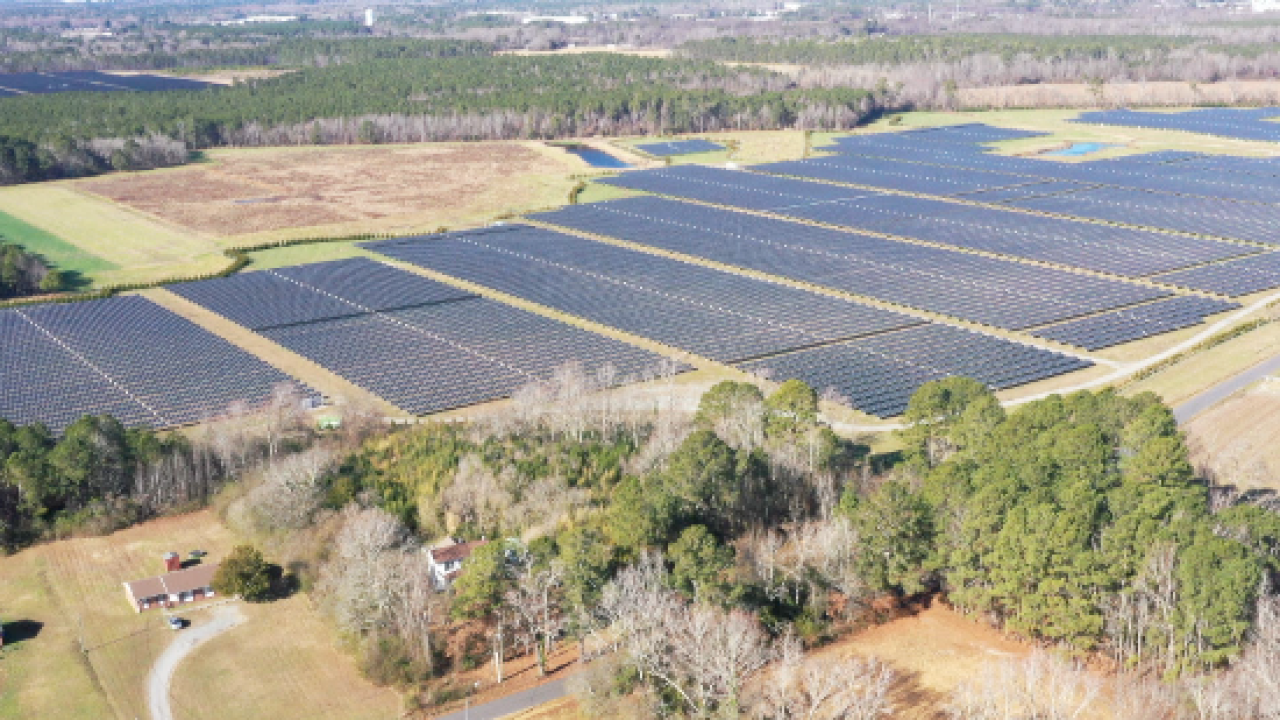
Energy produced here doesn’t necessarily stay here, either. The electricity generated by many of Suffolk’s solar fields feeds into the regional grid. Local consumers see little change in their rates or reliability. What we lose in agricultural capacity, we rarely (if ever) regain in community benefit. If Mayor Duman’s statement is true, if agriculture really is part of Suffolk’s identity, then we must recognize that the identity of a community is not measured in megawatts, but in stewardship.
Beyond the data are human stories: families debating whether to lease land, farmers trying to compete with inflated prices, young producers struggling to find affordable acreage. Even those not directly involved feel the ripple effects, including, fewer local suppliers, less cooperative infrastructure, and a slow erosion of the social fabric that defines rural life.
Speculative solar companies do not bring long-term investment; they bring volatility. When subsidies shift, they move on. The panels remain, but the partnerships dissolve. What’s left is altered land and a weakened agricultural base. That’s not sustainability. That’s short-term arithmetic at the expense of generational balance sheets.
The Stewardship Imperative
During a recent VALOR seminar, one of my Class VII Fellows summed it up beautifully: “We’re not the owners of the land; we’re the caretakers for whoever comes next.” That principle applies just as much to mayors and policymakers as it does to farmers. When leaders make statements about identity, those words must guide decisions. When a mayor says agriculture defines Suffolk, then economic strategy must align with that declaration, otherwise, the words ring hollow.
Renewable energy has an essential role to play in Virginia’s future, no one disputes that. But where and how we build it determines whether it complements or compromises the land that feeds us. Here are 2 alternatives to consider:
- Install solar on existing rooftops and warehouse facilities
- Install solar over parking lots
These two common sense approaches harness the benefits of solar without removing productive farmland from circulation. They respect both our clean-energy goals and our agricultural heritage. Progress is not about choosing between energy and agriculture. It’s about refusing to sacrifice one for the other.
Leadership Grounded in Accountability
Mayor Duman’s words were not just ceremonial, they were a standard. “Agriculture isn’t just part of our economy; it’s part of our identity.” Powerful words, and words with weight.
Our responsibility, as citizens and leaders, is to ensure those words guide decisions, not just speeches. Every major action affecting Suffolk’s land base should be tested against that commitment. If we pause to ask whether our choices protect or diminish the identity we claim to cherish, we can build an energy future that strengthens, rather than supplants, our agricultural foundation.
This moment demands leadership with substance, not slogans or winded narratives. It requires acknowledging that a field’s value cannot be reduced to dollars or kilowatts, and that lasting prosperity depends on safeguarding the ground that sustains us. Our policies, from zoning to economic development, must meet that promise. If we fail to honor it, we risk a future Suffolk where the fields that defined us survive only in memory.
The heart of leadership, like the heart of farming, is stewardship. Measured not by what we gain today, but by what we preserve for tomorrow. Suffolk’s fields are teaching us that lesson in real time. The question now is whether we will act with intention and uphold it.
If you are interested in diving deeper into this topic, here are a couple of good references:
- Virginia General Assembly. Virginia Clean Economy Act (HB 1526 / SB 851), 2020.
- Suffolk Economic Development. Beginner Farming Seminar, 2025.
- National Renewable Energy Laboratory. Solar Resource Maps for the United States, 2024.
- U.S. Department of Energy. Ivanpah Solar Electric Generating System Project Overview, 2014.
- Regional Data. California Economic Impact by Industry, 2024.
- NRG Energy. Ivanpah Project Update and Decommissioning Announcement, 2025.
- U.S. Department of Energy. How Does Solar Work, 2025
- WHRO Public Media. New Agricultural Specialist Envisions Bright Future for Suffolk Farmers, 2025.
- Shangraw, R. (University of Michigan). Considering Feasibility of the Virginia Clean Economy Act, 2021.

 valeadersor.com
This article has several flaws, all based on some faulty assumptions it makes. But before I dive into those, consider this. Whether you are growing corn, beans, peas, or cotton, all of farming is about converting natural resources (sunlight, rain, soil) into a marketable commodity. At its root, farming is the process of turning solar energy into another, more marketable form. So quibbling over whether you are producing an organic or an inorganic product from the land is a very thin distinction. If I produce cotton fiber for textiles, that saves the energy needed to produce a synthetic like rayon at the cost of acquiring the cotton. If I choose to produce a synthetic by procuring electricity and oil instead, I’ve likely spent a similar amount of time, effort, and energy to produce a similarly priced product. At its core, that is how capitalism works. If cotton wasn’t a cost effective fiber to produce textiles from, no one would buy it. Similarly, if rayon couldn’t be produced economically, no one would buy it.
So whether the land area produces natural fibers or it produces electricity to produce synthetic ones, the net value creation should be similar. As the article points out, solar power generation likely has a much lower life cycle cost, so it is going to produce greater profit margins with less variability than an organic product produced with the same amount of land area.
Now, back to the fallacies. The article says : “Once fertile farmland is converted to solar use, it leaves production for decades. It no longer contributes to Suffolk’s economy, food supply, or rural stability.” The logical problem is that the same amount of value (or more) is produced when the land is used for solar. That money goes to the farmer/land owner, and then into the local economy in exactly the same way it would have if the money had been generated from the sale of crops. It only leaves the local economy when the owners are not local. And guess what? Farms that sell out to large agribusiness coops are guilty of exactly the same flaw — that money produced by that farmland leaves the local area and is only partially retained in the form of salaries for hired hands that may live and work locally, but no longer own the land. So whether the workers on the land are solar engineers or farm hands, the split of local vs. remote revenue remains roughly the same. It’s disingenuous to say that the land leaves production. It just happens to be producing a different product. The real issue that the article fails to properly address is property ownership and property rights. Instead, it falls back on “we’ve always been a farming community” as a rationale to oppose market driven change.
Well, it used to be known far and wide that Suffolk was the peanut capital of the world. But I’d venture it’s a safe bet that the percentage of land dedicated to peanut cultivation (as compared to soybeans, cotton, etc.) is a tiny fraction of what it was 40 years ago. Is that an argument to stop growing corn, cotton, and soybeans? “We were always the peanut capital. We’re destroying the local economy and our heritage by growing cotton.” Sounds kind of silly when you put it that way.
Now, on to land use and property rights. How would you feel if a group of “concerned citizens” decided to band together and tug at heartstrings and tell you that you couldn’t grow cotton anymore because it wasn’t a traditional use of the land in Suffolk? Or consider this cat, already long out of the bag. Suppose those same “concerned citizens” decided to come tell you that you couldn’t sell your farm to ConAgra. Or that you couldn’t get it rezoned as residential and get into the housing market instead of agribusiness? Or that your children couldn’t do what was best for them with the land?
What it starts to sound like is some sort of state-run, planned collective of farms that will only grow what the group-think says is right and only use that land for what the state (or “concerned citizens”) thinks is best. Now that sounds a lot like how agriculture was done in the USSR and China in the 60s and 70s and we all know how that works out.
So, does a land owner have autonomy when it comes to property rights? Can you build a barn where you want to? A tractor shed? Can you decide this year not to grow peanuts? Can you subdivide off part of the farm for a child to build a home on? Can you sell parcels to other farms, or buy from them? Do you have the right to sell your entire farming operation? Locally? To a national concern?
So why should you disallow the right to use land (when zoned and regulated appropriately) for solar generation? It creates a product that has a commodity market, no different than peas or beans. This entire article boils down to a single argument, which is an emotional one. Namely, the fallacy that “we are stewards of the land” and “we’ve always farmed here”. If either of those things were true, Suffolk would still be a string of Pamunkey villages along the Nansemond river, and all the farm fields we see today would still be virgin forest.
Progress happens, sometimes over centuries, and sometimes in the blink of an eye. You should look at this issue from some practical, rather than emotional angles. The legacy of farmers in our country is the very genesis of the nation. It is the backbone that our nation grew up on into the 20th century. But there is more to business, agriculture, and land use than just what we all know from 40 years ago. As emotionally fraught as it is, the decision to oppose solar as a viable, legitimate use of farm land is just that, an emotional one. From a logical perspective, a business perspective, and a personal rights perspective, it should not be a decision made based on emotion and logical fallacies. It is unfair to farmers now, farmers in the future, and their progeny for a group of “concerned citizens” to dictate land use. The market always decides. It’s up to Suffolk and its farmers if they will adapt to changing times, or remain on the sidelines while opportunity passes them by.
(That’s my $.02 about this article!)
Mr. Hotton, good afternoon. You raise fair points about property rights, and I agree that individual autonomy and economic viability must always be part of the discussion. My intent in writing this piece wasn’t to oppose solar power or suggest that change is bad, quite the opposite. I support renewable energy and recognize its importance to Virginia’s future.
That said, I do believe policy plays a powerful role in shaping market trends, the Virginia Clean Economy Act is a perfect example. Without the policy-driven subsidies the current development pressure wouldn’t exist. Policy should therefore be guided by long-term, visionary goals that serve the broader interests of the community, not short-lived or reactionary trends.
I sincerely appreciate your feedback and the time you took to share it. My focus, however, is on how deliberate, informed policy and leadership can help us navigate growth responsibly.
This isn’t an easy topic to unpack through social media comments. If you’re open to it, I’d love to continue the conversation in person, maybe over coffee sometime. Feel free to send me a direct message and we can set something up.
Thank you for speaking out and your commitment to preserving Suffolk’s rural communities.