


There’s something about agriculture that forces you to be adaptable. Weather, markets, legislation — it’s a field (pun intended) where change is the only constant. So, it felt appropriate that our third VALOR VII seminar in Richmond began with yet another set of curveballs: a snowstorm, a power outage, and a city-wide boil water advisory. At this rate, I wouldn’t be shocked if our next seminar gets interrupted by a meteor strike, which isn’t entirely impossible. (#99942Apophis … IYKYK!)
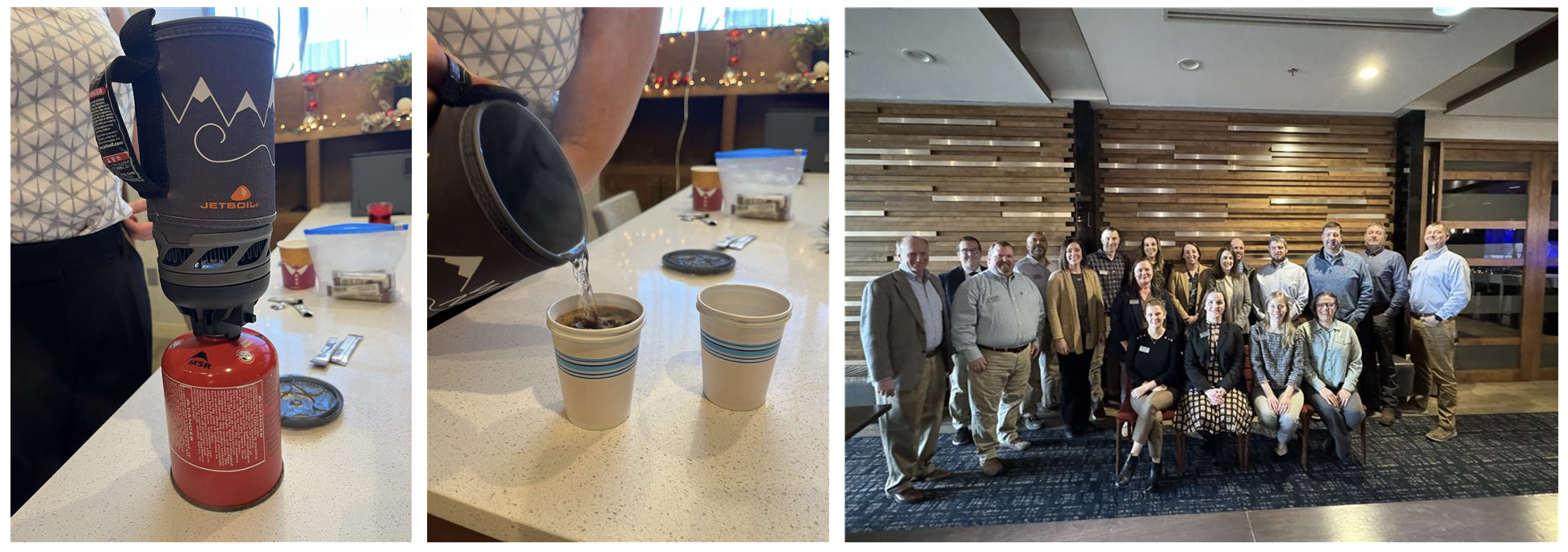
No running water at the hotel? No problem. We huddled around a camp stove in the lobby, brewing coffee as determined travelers refusing to start the day uncaffeinated. If nothing else, it was a good reminder that sometimes, survival hinges on a propane burner and a strong will. Sierra, THANK YOU!
A Straight-Talking Senator & the Art of the Rules
Senator Timmy French is one of only a few legislators in Virginia actively farming. That alone makes him an asset in Ag policy discussions. Our conversation with him reinforced something crucial: most legislators don’t know what they don’t know. As an example, when another policymaker asks, “why poultry farmers raise dark meat chickens if Chick-fil-A doesn’t use dark meat?” it’s not out of malice — it’s just a knowledge gap that needs filling. That’s where advocacy comes in.
But advocacy without structure is just noise, and that’s why Roberts’ Rules of Order matters. We had a great session learning about parliamentary procedure; we examined how process shapes power and how knowing the rules is key to holding decision-makers accountable.
My biggest takeaway? The general public assumes local governments always follow these prescribed rules — but that’s not always the case. For example, a recess, a privileged motion, can only be called under specific conditions. The chair cannot simply take a break whenever a discussion isn’t going their way. Yet, procedural shortcuts like this are often used to control or shut down difficult conversations, bypassing the very processes meant to ensure fairness and transparency.
If agriculture professionals want a real seat at the table, we must understand not just what should happen, but what actually happens, and Roberts’ Rules is the framework for preventing bad governance from going unchecked. This intensive session, packed into a tight, overcrowded hotel conference room, reinforced a crucial lesson: structure, strategy, and process aren’t just bureaucratic formalities, they’re the foundation of effective advocacy and responsible leadership.
Sitting at the Big Table
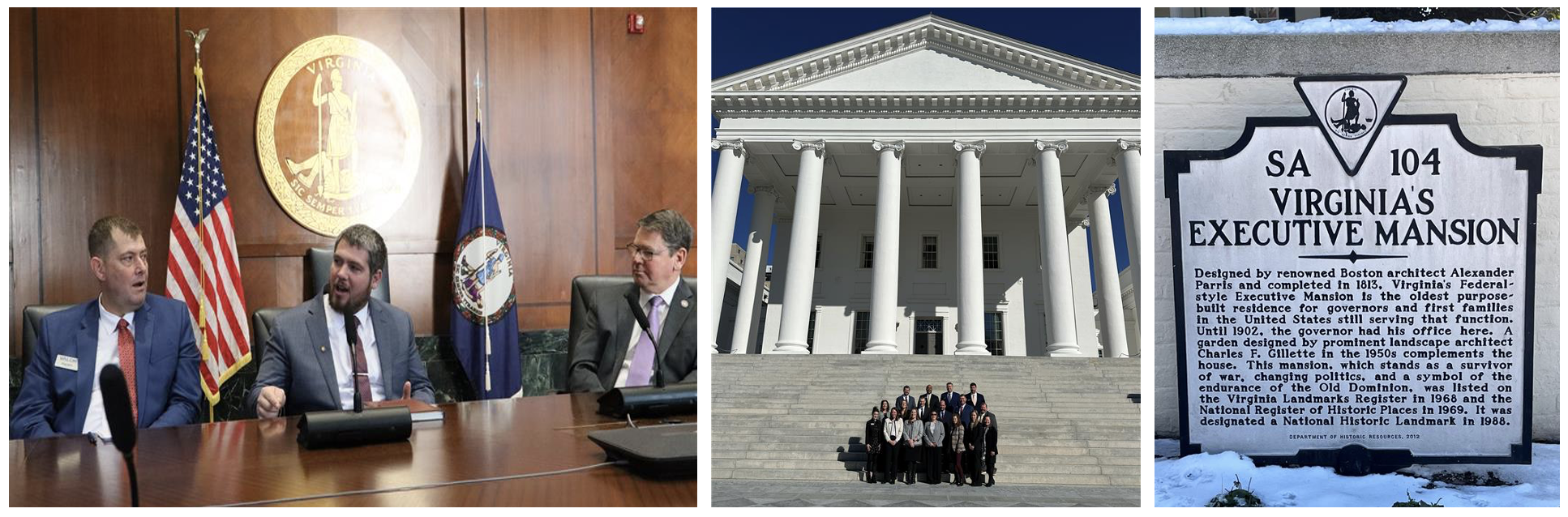
One of the more surreal moments of the week was sitting in the Governor’s Cabinet Room, where decisions that shape Virginia’s economy and agriculture actually happen. Secretary of Agriculture and Forestry, Matt Lohr, led us through discussions about everything from land use policies to the state’s unexpectedly massive charitable gaming economy, a significant contributor to Virginia’s economy that most people just don’t think about or consider.
We also got a chance to discuss a topic close to home for me — Horses! It’s easy to dismiss horse racing as old-fashioned, something associated more with nostalgia than with modern agriculture. But when you break it down into agricultural economics, land use, and industry ripple effects, it becomes clear that this isn’t just about sport — it’s business, BIG BUISNESS! The horse industry in Virginia contributes over $1.2 billion annually to the state’s economy. With Colonial Downs securing a spot as a Derby qualifier, Virginia is now attracting higher-caliber horses, trainers, and breeders, which in turn fuels jobs, tourism, and agricultural production.
At its core, racing is an agricultural enterprise. Every horse on the track represents a supply chain of farmers, feed producers, veterinarians, and stable workers. The demand for high-quality hay, oats, and grains means that Virginia’s grain and forage producers have a direct stake in the racing industry. Beyond agriculture, horse racing also drives tourism and local economies. The resurgence of Colonial Downs is bringing in out-of-state visitors, hospitality revenue, which all trickles down to restaurants, hotels, and small businesses in surrounding areas. More horses mean more jobs and a stronger economic foundation for Virginia’s rural communities.
Horse racing isn’t just an old pastime — it’s a modern economic engine that ties together farming, tourism, conservation, and business. And as Virginia’s role in the racing world continues to grow, it’s clear that this industry is far from fading, it’s just getting started.
As we wrapped up our visit to the capital, we took a moment to pass by Virginia’s Executive Mansion, a symbol of the state’s long and storied governance. Standing proudly since 1813, it holds the distinction of being the longest continuously occupied governor’s residence in the United States.
A Fresh Perspective at Greenswell Growers
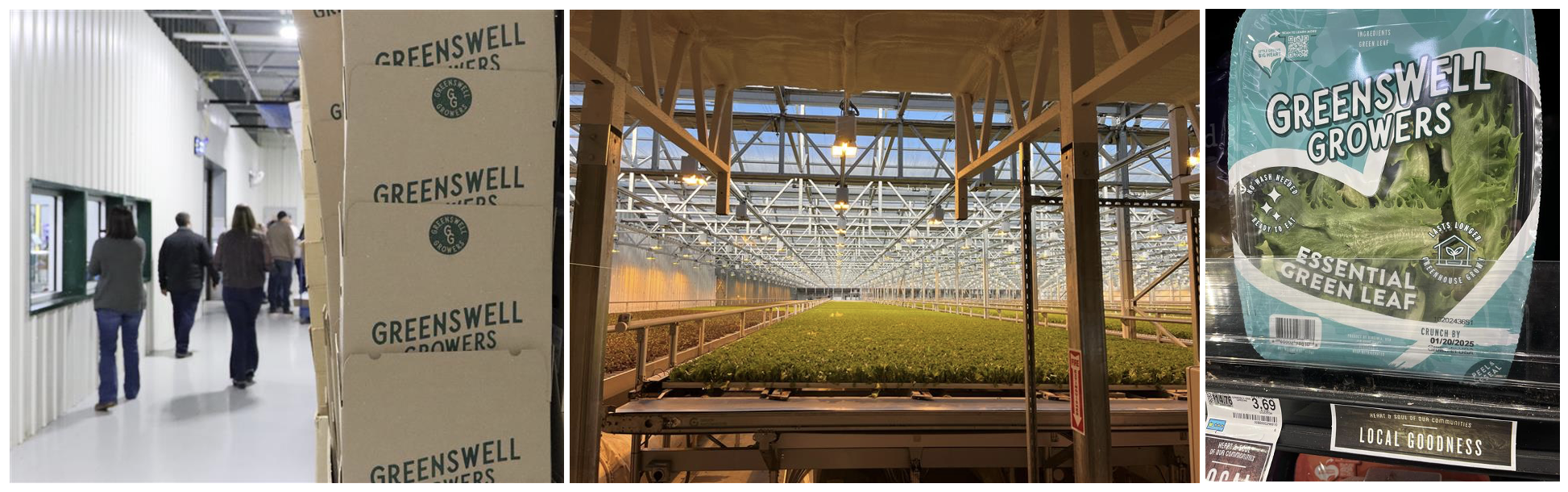
Our next stop was Greenswell Growers, an indoor farming operation in Goochland County that runs 24/7, year-round, producing hydroponic leafy greens at a highly efficient, scalable level. Unlike traditional row crop farming, Greenswell operates in a controlled environment, meaning they aren’t limited by weather, seasons, or land availability — a game-changer for urban and high-demand markets.
The numbers are striking — 1/20th the labor required for traditional farming, drastically reduced water use, and consistent production regardless of climate conditions. Walking through their facility felt like stepping into an ag-tech vision of the future, where efficiency meets sustainability.
A few days after visiting Greenswell, I spotted some of their lettuce at Food Lion — a reminder that technology, policy, and everyday food choices are all connected. But let’s be clear: This IS NOT a replacement for conventional row crop farming. It’s a complementary system, filling gaps where traditional methods face challenges, especially in locally produced fresh greens production.
Tastes Like Virginia: Reservoir Distillery
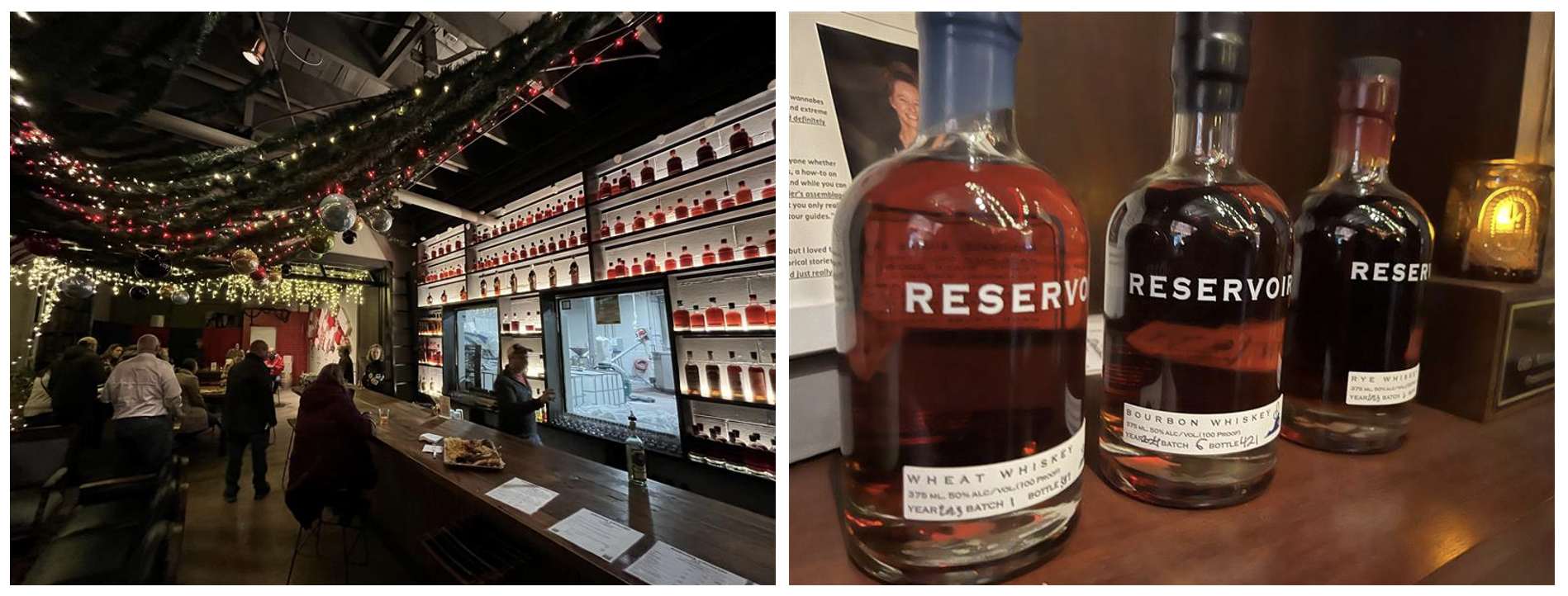
Bourbon, like agriculture, tells a story. At Reservoir Distillery, we heard first hand the story about Virginia-grown grains, Virginia-distilled spirits, and a flavor that could only come from here.
I’ve always been fascinated by how places influence products — terroir, in the broadest sense. Reservoir takes that concept seriously, crafting bourbon, rye, and whiskey that taste like where they came from — Virginia!
It was also a reminder that agriculture isn’t just commodity crops and livestock. It’s grain transformed into something entirely new, heritage and tradition bottled up, ready for someone to pour a glass and taste a bit of the land.
When the Big Banquet Got Canceled, We Got Cliff Instead
We were scheduled to attend the Virginia Agribusiness Council Banquet, a big networking event. Instead, the water crisis canceled it, and we ended up with a much smaller, much more meaningful conversation with Cliff Williamson, the Executive Director of VAC. Cliff isn’t one for fluff. His message was simple:
Networking isn’t about collecting contacts. It’s about cultivating relationships
Agriculture is a people-driven industry. Policy doesn’t happen in a vacuum, and neither do business deals. The difference between a passing introduction and a real connection can shape everything from legislation to market opportunities.
That evening, instead of shaking hands with dozens of people in a crowded room, we had real conversations. And honestly, for me, that was probably more valuable.
Strengthening Leadership at Virginia Farm Bureau
Our seminar wrapped up at Virginia Farm Bureau, where we shifted gears to communication and leadership — two essential skills.
We started out with some on-camera interview training. Does anyone actually enjoy watching or hearing themselves on camera? I know I don’t. Every time I hear my voice on playback, I cringe. But standing in front of the camera, answering pointed questions about utility scale solar, I quickly realized this was about more than just comfort — it was about clarity. Every pause, filler word, and shift in body language matters. More importantly, so does confidence and control over the message.
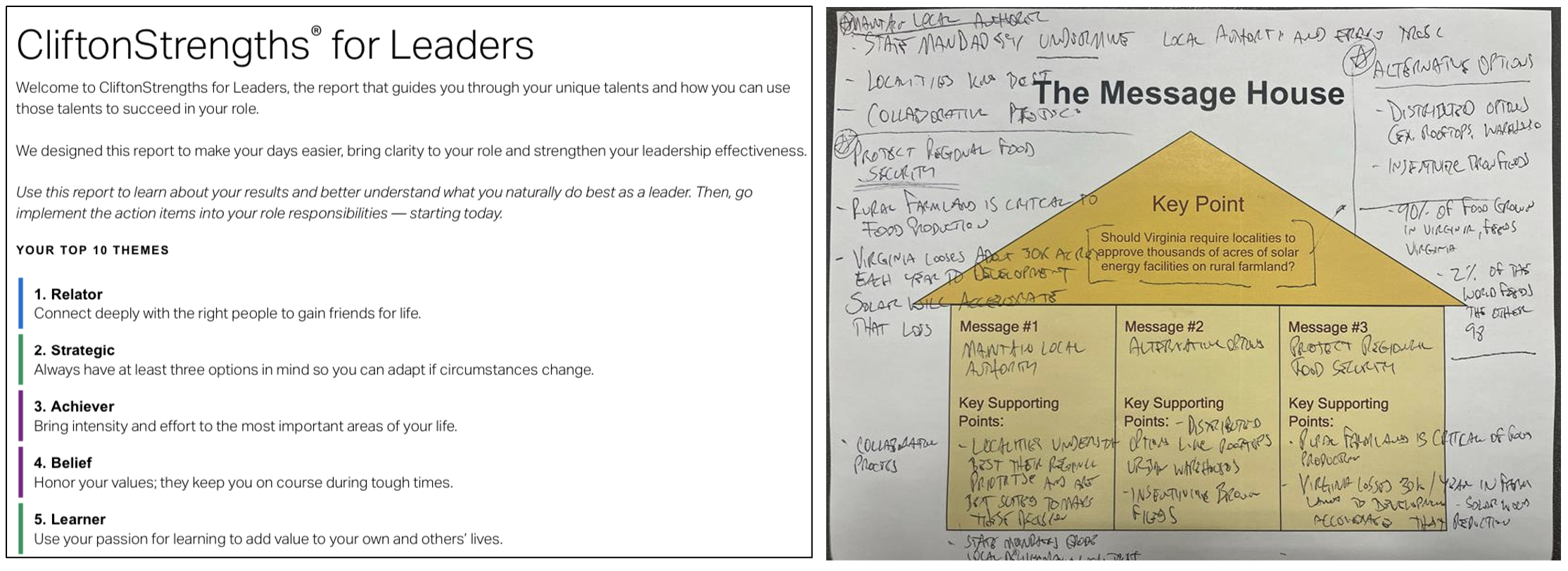
To help structure our responses, we were introduced to The Message House framework. This tool helps distill complex ideas into clear, concise, and impactful messages — a game-changer for customer engagement and messaging.
We also participated in and dove deep on the CliftonStrengths assessment, which breaks leadership styles into four domains:
- Executing – The doers who turn ideas into action.
- Influencing – The communicators who rally others to a cause.
- Relationship Building – The connectors who foster trust and teamwork.
- Strategic Thinking – The planners who analyze and anticipate.
It turns out that my top strengths — Relator, Strategic, Achiever, Belief, and Learner, place me squarely in the Executing and Strategic Thinking domains. Some of us were natural influencers, leading conversations and inspiring action. Others were relationship builders, thriving on collaboration. No single leadership style is superior — success comes from knowing how to work with, complement, and rely on others’ strengths.
Tying It All Together: Leadership & the Legislative Process
Understanding ourselves is one thing, understanding how to navigate the system is another. We also got a crash course in the legislative process, reinforcing the idea that advocacy isn’t just about having the right message, but knowing how and when to deliver it.
This session at Farm Bureau was invaluable, and I’ve already started applying these lessons in my professional life. The Message House framework has helped shape my team’s communication strategy, ensuring we deliver clear and focused messages to customers.
By the time we left, one thing was clear: it’s not just about knowing the issues, it’s about knowing how to communicate them effectively. And that’s a skill we’ll all be honing long after this seminar.

Final Thoughts:
Nothing about this week went as planned. Yet, somehow, it all worked out — maybe even better than expected.
- We adapted. Because agriculture demands adaptability.
- We learned. Not just about policy and leadership, but about how the system actually functions.
- We connected. With the people who are shaping the future of agriculture in Virginia.
If there’s one key takeaway from this seminar, it’s this: agriculture doesn’t happen in isolation. Every decision, every policy, every opportunity is shaped by relationships, governance, and advocacy. If we want a seat at the table, we have to show up, speak up, and stay engaged. Even if it means boiling water over a camp stove to get there!

 valeadersor.com