

Alongside my VALOR class VII cohort, I enjoyed an enriching and exciting four days in the tidewater region and eastern shore of Virginia in late November. Over the course of the seminar, we visited a variety of farms and agribusinesses, learning the unique challenges, production practices, market conditions and marketing associated with cotton, peanuts, pork and potatoes, within our local markets and globally. We tackled some controversial topics, including farm transition, solar farming, lab meats and automation. Furthermore, we identified and articulated leadership qualities in each member of the agriculture community who hosted us and facilitated tours, providing insight as we seek to hone our own.
Peanuts in a nutshell
Our seminar kicked off at the Virginia Peanut Growers Association (VPGA) office in Franklin, Va. Executive secretary of the VOGA and program director of the Virginia Peanut Board, Caitlyn Joyner, gave us a crash course on the peanut industry, within Virginia, the US and globally. Caitlyn’s presentation included the four types of peanuts and their utility, the top peanut-producing states in the US, production practices, challenges, sustainability, nutrition and more.
With a greater understanding of the peanut industry, we then visited Belmont Peanuts for a facility tour led by Robert Marks, including lunch at their on-site deli, sponsored by the VPGA. Currently, Belmont Peanuts cooks ~64,000 peanuts per week in a production plant located in Courtland, Va. The business started in the basement of the Marks’ family home in 1993 by Robert’s parents, Bob and Patsy. Since then, it has evolved and grown substantially, with the Marks’ family at the helm. Robert joined the family business full-time in 2012, and his two sisters, Megan and Kelly, followed suit shortly thereafter.
As we wandered the plant, Robert shared their production and marketing practices, starting with the delivery of raw peanuts, cooking, flavoring, container filling, labeling and finally packaging for delivery. In late November, one would think we were visiting during their busiest season, as they prepare holiday orders; however, Robert shared by that time, the bulk of their products had already hit shelves. July through September is their busiest season in preparation for the holidays.
Belmont Peanuts are available for purchase at the on-site deli, online and at local retailers. Additionally, their products are available at the popular discount retailers, T.J. Maxx, HomeGoods and Marshall’s. So as not to devalue their premium products locally, the products sold to discount retailers contain different labeling.
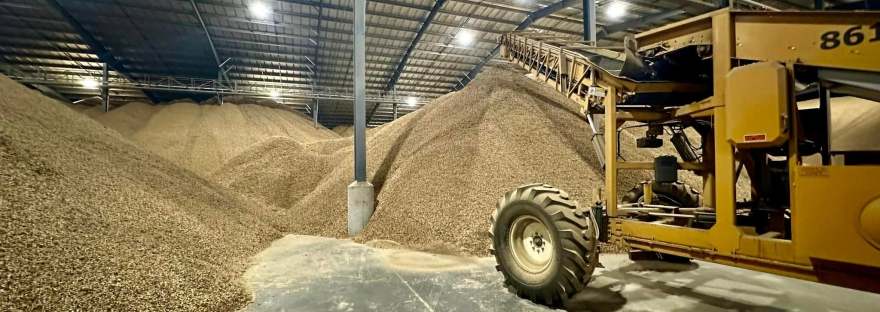
Our next stop was a Birdsong Peanuts plant, one of the largest peanut shellers in the world. If you’re unfamiliar with the shelling business, like I was, Birdsong contracts local peanut growers, then at harvest, growers deliver their peanuts to be dried. The grower pays for the drying, then, the peanuts are graded and the grower is paid. Next, the peanuts are shelled (i.e. shells are removed) and stored until they are ready to ship.
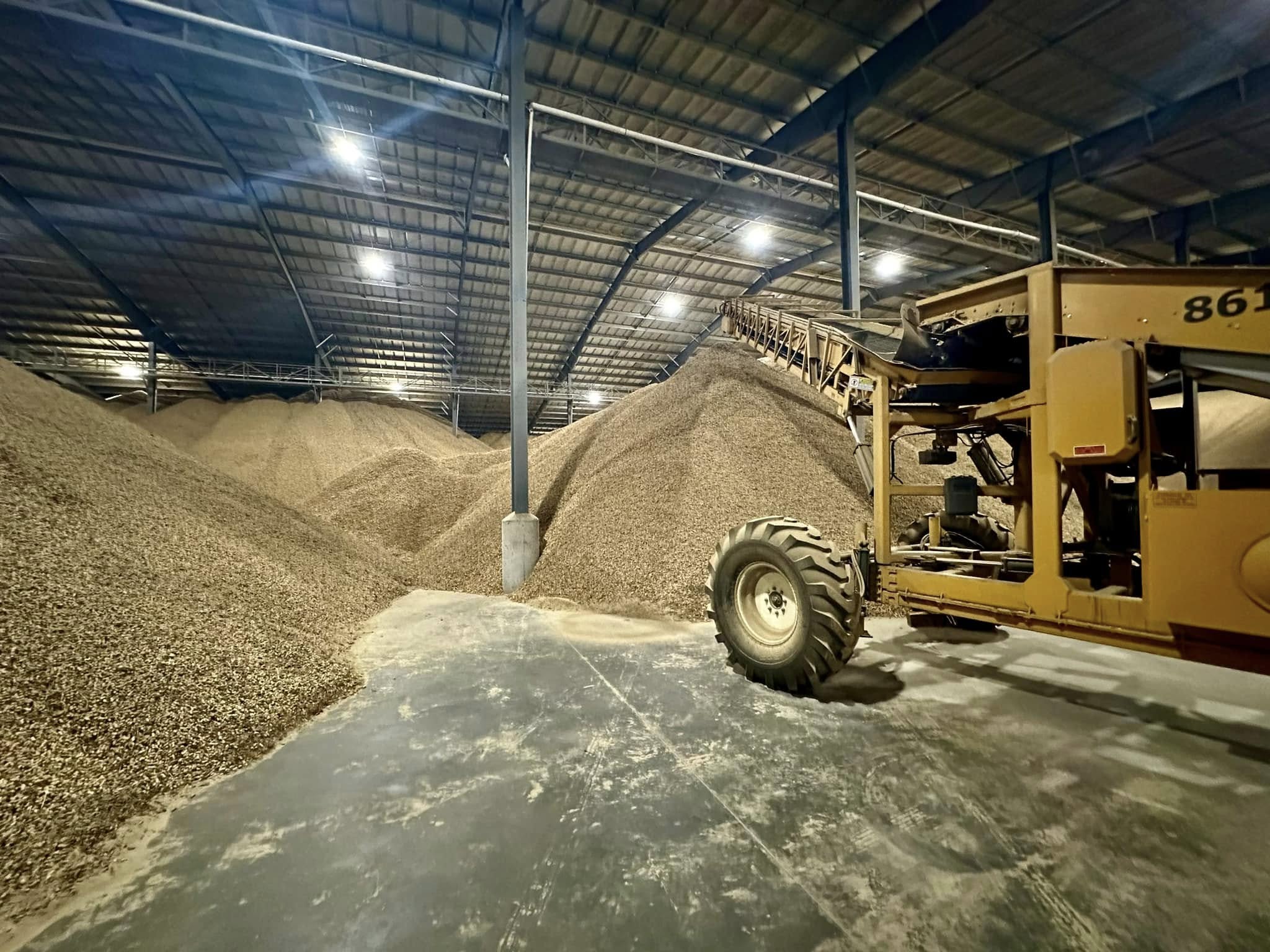
Birdsong shells Virginia and runner peanuts for all the major brands, including Hershey, Smucker’s, M&M Mars, Jiffy and more. 25% of their shelled peanuts are exported. China, Europe and Mexico are some of their biggest customers.
One topic of interest for our cohort was the volatility of the peanut market. Unlike most commodities, peanuts are not a highly volatile commodity. Generally, consumption remains consistent; however, peanut consumption did experience a spike during the pandemic. The spike could be attributed to an increase in PB&J consumption, since students were home for lunch, and the increased popularity of baking.
We concluded a long day exploring the peanut belt at the Tidewater Agricultural Research and Extension Center (AREC) for a presentation and dinner. The presentation included an overview of the Tidewater AREC’s facilities, which includes a 465-acre farm, 34 buildings and 2 greenhouses, as well as their primary disciplines of study and technologies. While we conversed with students and faculty, we posited challenges facing the agriculture industry, including the slow adoption rate of innovation, our inability to effectively distribute research from Virginia Tech and its ARECs for use by producers, as well as solar farming.

When in Smithfield…
The next morning, we traveled to Smithfield, Va. Can you guess why? The Smithfield pork processing plant, of course. We removed jewelry and suited up in helmets, hairnets, gloves, boots and coats to tour the processing facility. To be frank, the production floor was overwhelming; there were so many moving parts (and employees) necessary for each specific cut of pork; Hickory smoked bacon, bacon bits, ready-to-cook bacon, ready-to-eat bacon, microwave bacon (for Dunkin’ and McDonalds), country ribs, pork chops and more.
One topic of interest was the balance of human labor and automation on the production floor. During our 30-minute tour, we saw some examples of automation as well as hundreds of employees, carrying out their designated role on the belt like a well-oiled machine; however, to improve efficiencies, more and more automation will be incorporated. To combat the negative stigma associated with automation (i.e. job loss), Smithfield calls the efficiency-improving tech “cobots” instead of “robots” because they will work to support their workforce and not replace them.
While half of our cohort toured the production floor, the other half was briefed on Smithfield’s sustainability and ESG practices. Following that conversation, we discussed lab meats and the impact on the pork industry. Given the reduced carbon footprint associated with pork production (compared to beef), the industry has not experienced the market competition. In fact, we discussed a trend that offers opportunity for the pork industry, a hybrid burger, in which beef products are infused with pork, limiting the reduced carbon footprint. The Smithfield team posited that we are likely to see the hybrid burger on menus in the near future.
Our last topic of discussion at Smithfield was the impact of the pandemic. At the Smithfield plant, they outfitted their production floor with dividers and doubled-down on existing PPE measures to ensure employees were not transmitting disease. At the plant, their biggest challenges were navigating gaps in production when employees did fall ill and adjusting to shifting orders while consumption rates and demand were in flux; however, their kill facilities experienced greater issues. Smithfield’s largest kill facilities are in Tar Heel, Nc. (25-30K head/day) and Sioux Falls, Sd. (~20K head/day). The Sioux Falls facility was closed for a limited amount of time during the pandemic due to labor shortages, which caused the euthanasia of market hogs due to the inability to process at market weight. Devastating!
Cotton has entered the chat
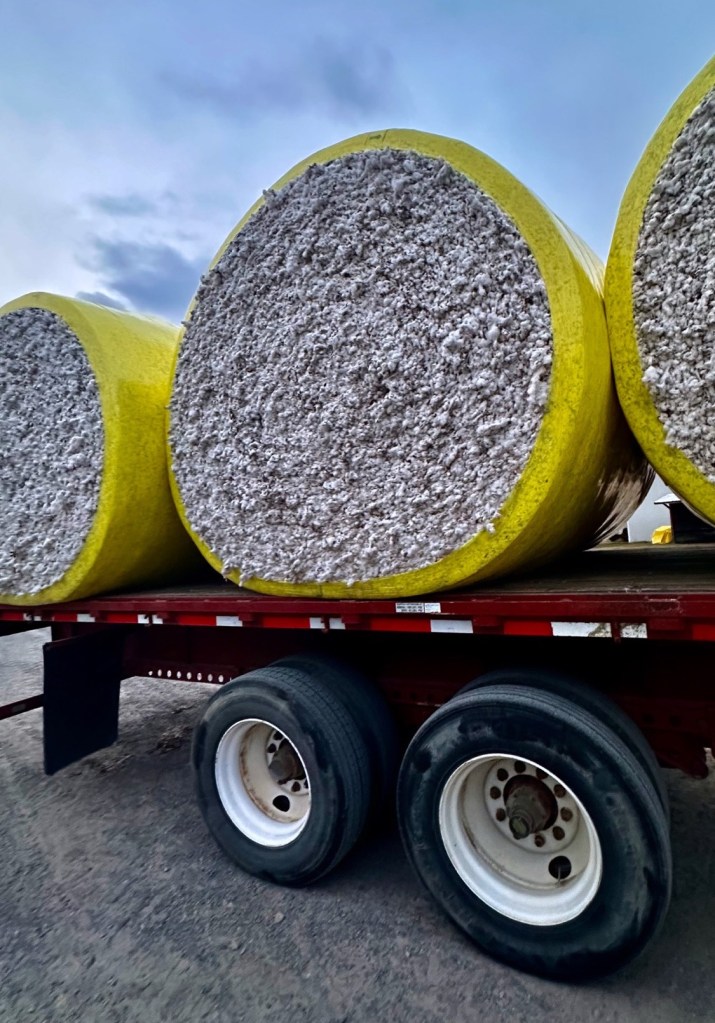
Cotton requires the same sandy soil as peanuts for production; therefore, the cotton belt and peanut belt are one in the same in Virginia. We kicked off our exploration of cotton production at Commonwealth Cotton Gin. We were briefed on the cotton industry, production practices and challenges. Did you know that Virginia has some of the highest quality cotton fiber and yield in the country? Furthermore, US cotton is some of the most sought-after in the world. As we explored the cotton gin, we traced the crop’s journey from field bale, dawning yellow or pink wraps, to ginned cotton bale, stamped “US Cotton” and ready for grading in Florence, SC.

As we concluded our tour of Commonwealth Cotton Gin, a blue truck pulled up, loaded down with yellow-wrapped, cotton round bales. Foreshadowing our next stop, the passenger-side truck door read, “Rogers Farms, Wakefield, Va.”

Upon pulling up to Rogers Farms, we were greeted first by a yellow lab, and then by Paul Rogers. Paul grows soybean, peanuts and cotton on more than 1,000 acres of rented and owned land. Paul’s grey vest, read, “Sunbelt Expo Southeastern Farmer of the Year” which he was awarded in 2018 for the state of Virginia.
Paul gave us a chilly tour of his operation. We were in awe of his specialized and massive equipment. Paul shared the nuances of each, as well as his tumultuous relationship with his finicky cotton picker.
Following the farm tour, Paul invited us in for dinner. His wife, Pam, had prepared a taco bar at the hunt clubhouse and his son in-law, who works as a special agent, shared an interesting presentation on the prevalence of drug use in the state of Virginia, particularly within our rural communities. We were joined by Caitlyn Joyner, from the VPGA, her predecessor, Dell Cotton, two local VALOR alum and other guests.
Miss Madeline’s maiden voyage
Prior to heading to the eastern shore on day three, we visited the Perdue AgriBusiness port in Chesapeake, Va., the only bulk grain exporter on the East coast. The facility ships soybean, soybean oil, soybean meal, corn and wheat internationally, loading ~100 barges annually. Local producers bring truckloads of soybean, corn and wheat for export; however, the majority arrives via train car from the west. While we toured the expansive facility, a barge named the Miss Madeline was being prepared for its maiden voyage. The Miss Madeline can transport more than 9 million pounds of crude soybean oil. Miss Madeline’s departure, which took place the day following our visit, marked the first-ever liquid barge to depart the facility’s deep-water terminals.

As the plant managers facilitated our tour, we inquired about the impact of the recent port strike as well as the pandemic. Both caused a myriad of logistical issues to navigate, typically on short-notice, which seemed to be a theme associated with managing exports.

Never refrigerate your potatoes
Following the 17.5-mile trek across the Chesapeake Bay Bridge, we piled out of our two white vans at a farm market off Rt. 13. The sign on the building read, “Quail Cove Organics”. A man, who introduced himself as the owner, Bill Jardine, greeted us and offered ice cream and doughnuts as he began sharing the story of his organic produce farm. The ice cream was very sweet and had a purple hue. Come to find out it was sweet potato-infused. In addition to sweet potatoes, Bill grows certified organic soybean, Brussels sprouts, broccoli, cabbage and more. If you’ve ever treated yourself to the sweet potato variety of Rt. 11 potato chips (based out of Mt Jackson, Va.), then you likely have Bill to thank. Rt. 11 sources the majority of their sweet potatoes from Bill.
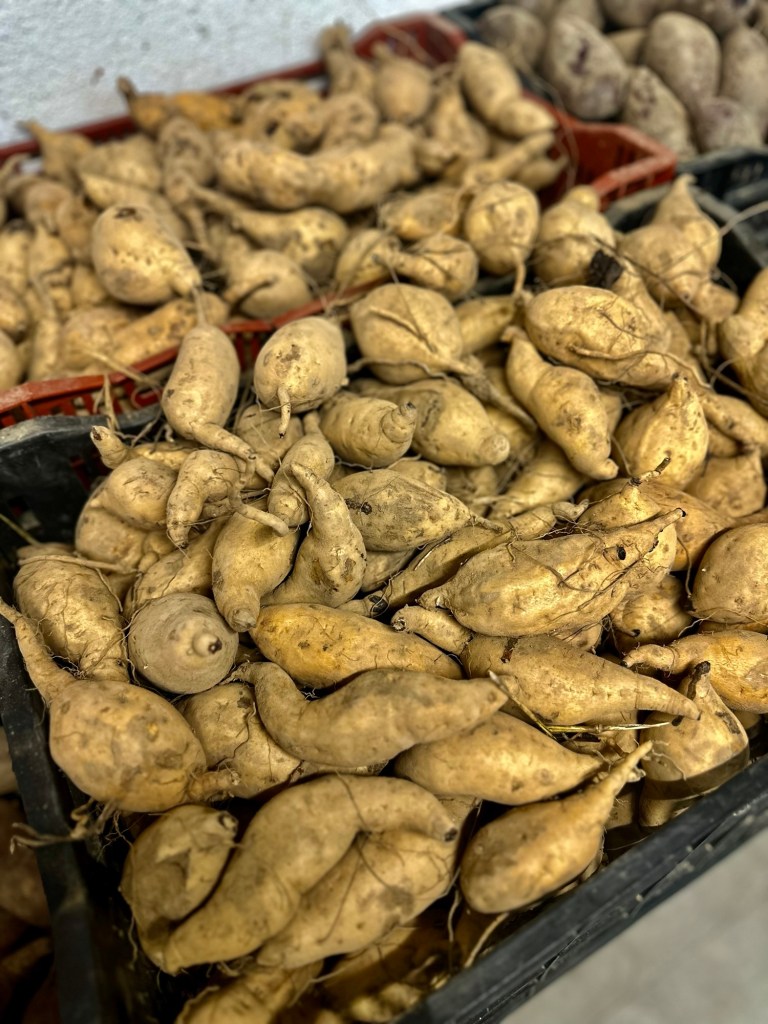
Bill defines organic as, “feeding the ground instead of the plant.” Bill shared the requirements associated with certified organic produce, including clean (non-GMO) seeds, 3 years of clean soil history, documented inputs (approved substances only) and certified processing.
A common misconception of organic agriculture is that no substances are applied to the plant; however, there are many substances, both synthetic and natural, which are approved for use.

One last takeaway from Bill, that I would be remiss not to share, is that sweet potatoes do not like to be cooler than 50 degrees. 60 degrees is ideal. Bill was adamant that if we only remembered one thing from our visit to Quail Cove, it would be that you should never refrigerate sweet potatoes. He offered each of us a bag of potatoes to take home (and not refrigerate). I chopped and oven-roasted mine to serve at Thanksgiving later that month.

Last, but not least, we visited Dublin Farms, a fifth-generation, family-owned, 7,500-acre potato farm in Horntown, Va. Part-owner and our host, Matt Hickman, shared the story of the operation, which dates back to the mid-1870s. The King of England actually granted a large track of land in which they currently farm. Over many, many years, the Hickman family has perfected their potato production and harvest. Currently, they maintain 500 acres of potatoes (white, red and yellow), 600-700 acres of green beans, as well as corn and soybean for rotational purposes. To limit disease and strengthen the soil, the Hickman’s rotate their potato crop at least every three years, if not more regularly.
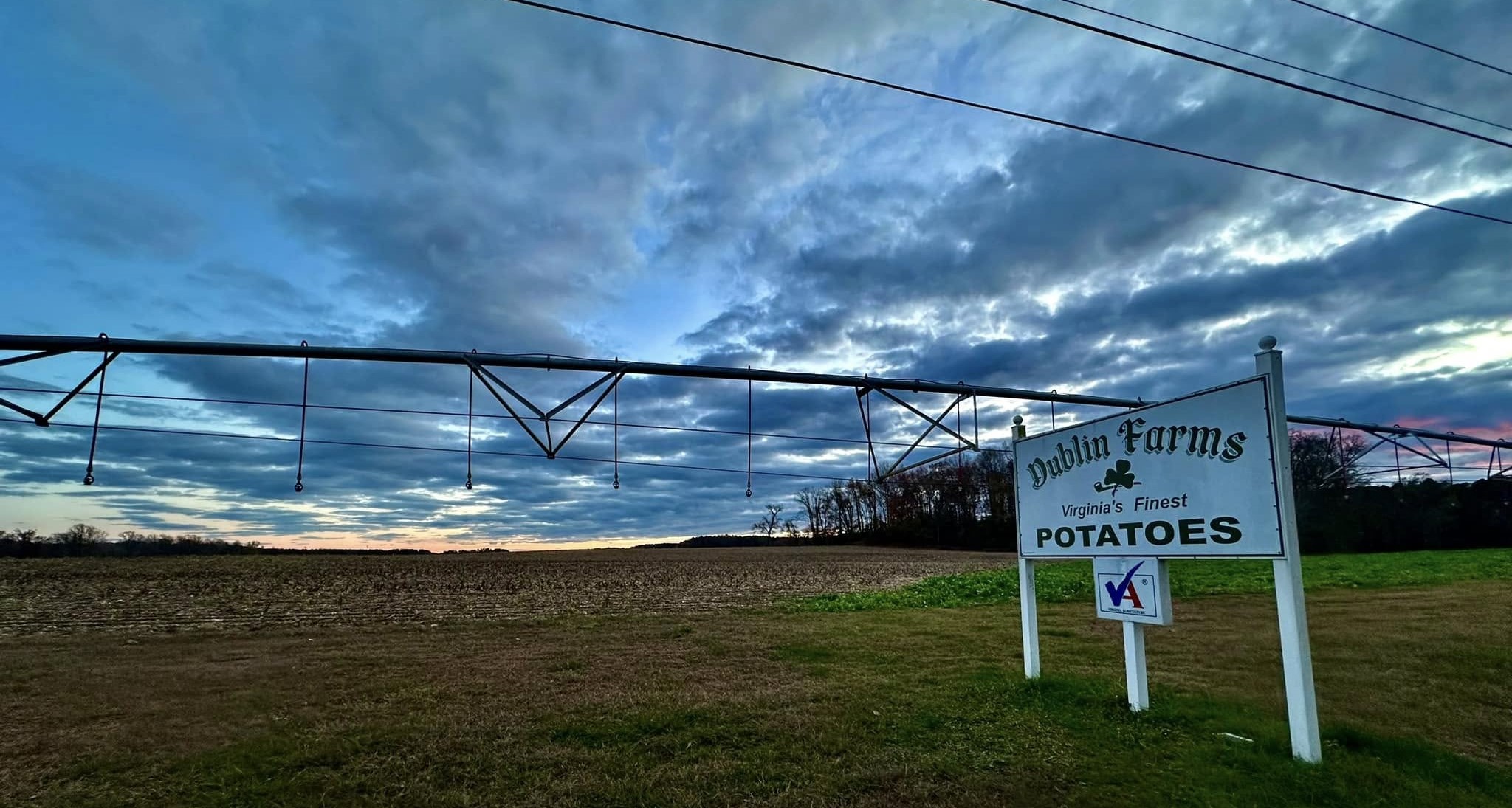
When the potatoes are brought in for processing during late June to early August, they are inspected in bulk on a conveyer belt by a machine called an Odenburg. The Odenburg has two cameras, which spot blemishes and defects on the crop. Nearly 10% of the annual potato harvest fail inspection and are tossed, as they do not meet quality standards for retailers or food service. At one point, those potatoes were repurposed to feed livestock, like swine; however, currently there are no livestock on the shore to consume them, so they are simply thrown away. Another 10% of the crop are deemed bag #2 quality. They may be smaller or contain minor blemishes; therefore, they are purchased for food service at ~50% of the cost of Dublin’s premium product. The rest of the potatoes are sorted size A, size B or chefs, which determine their price and purpose. After processing, the potatoes spend 24 hours in a cooler to prolong their shelf life.
Speaking of shelf life, the longevity of Dublin’s potato harvest is limited. Typically, potatoes that have been harvested between late June and early August are shipped, sold and either cooked or off the grocery store shelves by early September, at the latest. It is a quick turnaround! Dublin has shipped potatoes across the country, including Chicago, Dallas and even California. Hello Fresh, the popular frozen meal-kit service, purchases their small yellows and Birds Eye is a big buyer of their green beans.
The market conditions associated with potatoes, including pricing and demand, is quite interesting. The buyers set the price based on availability, which is dependent on weather (i.e. harvest conditions). In a typical year, the market price that Dublin can fetch decreases over the course of the season as northern farms begin harvest and availability increases. When northern farms begin harvest, Dublin shifts from northeast markets to southeast (I.e. Birmingham, Miami, Charleston, etc.) because they cannot compete on freight. Interestingly enough, the 2024 drought conditions were advantageous for Dublin’s potato crop, as potatoes prefer drier conditions.

Lastly, as a digital marketing professional, I must share Dublin’s success with social media marketing. Social media have been their most tried and true marketing strategy, as far as direct marketing is concerned. Matt said, “Our year-round social media presence has impacted our local sales profoundly.” Dublin has followers from all over the country that come back summer-after-summer on their drive to Chincoteague for vacation to visit the farm and stock up. Matt finds that folks enjoy the behind-the-scenes glimpse of their operation, which they can provide via social media. It creates a connection, differentiating their farm-bought product from those at the grocery stores. The power of social media!
TLDR
Overall, our seminar in the Tidewater region and on the eastern shore was a valuable learning opportunity. I came away from the trip in awe of how diverse Virginia’s agricultural landscape is. I have spent years touring farms, primarily in the southwest region of the state, and never stepped foot on a peanut, cotton or potato operation. Each commodity offers its own unique set of opportunities and challenges for producers to navigate, while seeking to achieve the same goal; Feeding, fueling or clothing the world in a profitable and sustainable manner.

 valeadersor.com