


I grew up about 25 minutes outside of Washington D.C. and almost always our class would attend a yearly school trip to one of the museums downtown- ugh, another trip to the Smithsonian?! When family and friends from across the country or around the world would visit, we would usually take them boating on the Potomac River passing Mt. Vernon, or up to Georgetown and watch the planes land on the runway at Reagan airport, then hop on the Metro to visit the Washington Monument or go to one of the many Smithsonian museums. Those museums that were so close and seemed so normal, were suddenly fun and new and exciting because the perspective was shifted, and I got to join in the excitement of others who may have never visited these places and may only get to do so once. This was exactly how I felt on our first in-field seminar with VALOR.
I have lived and worked in the area for only five years but quickly learned it was unique from many aspects- being the northern-most region for cotton and peanut production in the U.S., one of the top poultry producers on the East Coast, having a prominent seafood industry, and a large military and port presence. When working in the thick of harvest or nutrient plan writing, I was so concerned about the crop growing in the field, I wouldn’t even think about what happened to it after harvest. I saw cotton and peanuts every day, so they became the norm to me, not the exception in the crop rotation. So, it was refreshing to have my VALOR cohort come to the Tidewater Region and bring their excitement and curiosity to our tours.
They say to explore your backyard, right? So here we go!
Our first commodity was peanuts- where Virginia is known as the first (and finest) state for commercial peanut production in the U.S. We met with the Virginia Peanut Growers Association to establish our facts and knowledge of the Virginia peanut industry and get a perspective of worldwide production and distribution. Virginia yield averages are strong, ranking second in the country and I would like to think we’re small but mighty, given that only eight of our counties grow peanuts. Our region produces about 12-15% of the U.S. crop, mainly known for the Virginia-Carolinas (V-C) type peanut: those big ballpark and whole gourmet-type peanuts. So, next time you’re enjoying a baseball game and crunching on a delicious peanut, thank a Virginia farmer! Most of the peanuts produced in the U.S. are known as ‘runners’ and used for peanut butter and candy. What really put peanuts into perspective for me was where these peanuts go. The demand is mainly coming from Mexico, Canada and Europe, with a focus on use in peanut butter. These regions support over half a billion dollars in exports! My favorite facts centered around the sustainability of peanuts: they use less water and provide more protein than any other nut and as legumes, they fix atmospheric nitrogen and reduce the need for applied fertilizers.
For our second stop, we looked at the end-product and value-added side of peanuts with a stop at local shop and deli, Belmont Peanuts. We learned about the start of this family business and how they use their own peanuts straight from the Marks farm. We talked with the family about the marketing side of things and how the packaging, in-store and online sales of their products has evolved over the years. To wrap up our tour stop, we were treated to a delicious lunch from the deli. If you ever stop by Belmont, I recommend the Belmont wrap- it has the best peanut sauce!

And finally, we joined the team at Birdsong Peanuts to discuss peanut procurement and exports. Birdsong Peanuts is the largest sheller in the country, with a sheller in all three peanut-growing regions. I had some knowledge of this before, but clarity after our discussion around the federal farm bill in the early 2000s that helped subsidize the peanut crop. After that program, the market and acreage in VA fell but has slowly come back. Nowadays, producers work on contracts and bring their peanuts here after harvest where they can be stored for up to two years until export. The U.S. supplies about 13% of the world supply of peanuts! We also touched on how international trade and tariffs can impact exports and demand for those peanuts in storage. My favorite part of this stop was seeing the storage facilities: imagine 600’ x 250’ of peanuts stacked a few stories high! It put into perspective the sheer amount of product our farmers grow.
To wrap up the day, faculty and staff at Tidewater AREC graciously hosted us for dinner and comradery. Mr. Ronald Daughtry and his family treated us to a delicious meal, and we spoke with Dr. Matthew Chappell about the center and research being done in the surrounding area. This stop was extra special for me, as I previously worked there and spent many hours in the field alongside this group. Mr. Daughtry told us a story about his time at Virginia Tech, sharing that sometimes people are put in places at certain times all for a reason and that really resonated with me. If I didn’t volunteer at the barn I did or go to the schools I did or accept the jobs I had, I wouldn’t know the people I know or understand agriculture the way I do. In a full circle moment, Mr. Daughtry was the person who first introduced me to the VALOR program. For that, I am thankful.
To kick off our second day, we began with a tour of Smithfield Foods in downtown Smithfield (yes, it is a real place). We spoke with the Sustainability Team on their missions around good stewards, good work and good food. I enjoyed learning about their efforts with biogas and methane capture as a source of renewable natural gas and wastewater treatment to improve water quality around their facilities. The company also reports on antibiotic use and publishes an ingredient glossary to ensure transparency and consumer education. Another fact I took home was that Smithfield is the largest supplier of heparin sodium in the U.S. and works with bioscience research to further human health and medicine. To wrap things up, we took a tour of the packaging facility. On this tour I noticed something small, but impactful about leadership: our tour guide started with Smithfield on the packaging line and worked their way up to another team. However, when they gave our tour, multiple employees on the line really connected with this employee and you could see the respect and relationships that were built. So, although this employee moved up in the ranks and may have a leadership title, they genuinely earned a leadership role among this team by those connections with all employees at all levels.

Our next stop was Commonwealth Gin where we learned about all things cotton. The family business began in 1992 after identifying a need for more ginning hubs in southeastern Virginia, where cotton could be processed and prepped for export. It was great to hear from the owners and see them speak highly of their agronomist, Johnny Parker, recognizing how he helped Virginia cotton acres grow since the beginning of his tenure. I’ve witnessed the leadership Johnny brings to the local industry from tackling research questions with the local AREC to providing daily updates on the radio and recommendations to producers. I was able to follow along on their explanation of cotton production and growth, but, when we got to the ginning process and warehouse, it was a whole new world. When running full speed, the gin can process about 30 bales an hour, or about 15,000 lb of lint! Not only is turnout- or how much lint is actually processed from the harvested material- important for the end product, but so is the quality of the lint. The gin employs staff who look at the futures markets and contracts to sell the lint, eventually distributing it worldwide. Just like the peanuts, the sheer size of warehouse storage was impressive. Additionally, when harvested material is being processed, there is fine trash, but also the seeds as a byproduct. Seeds can be stored (another massive warehouse) and used in other industries, so waste is reduced in this regard.
Our second evening, we visited Mr. Paul Rogers at his family farm, where we were able to look at some of the peanut and cotton farm equipment up close. We enjoyed a delicious meal and company including VALOR alum.
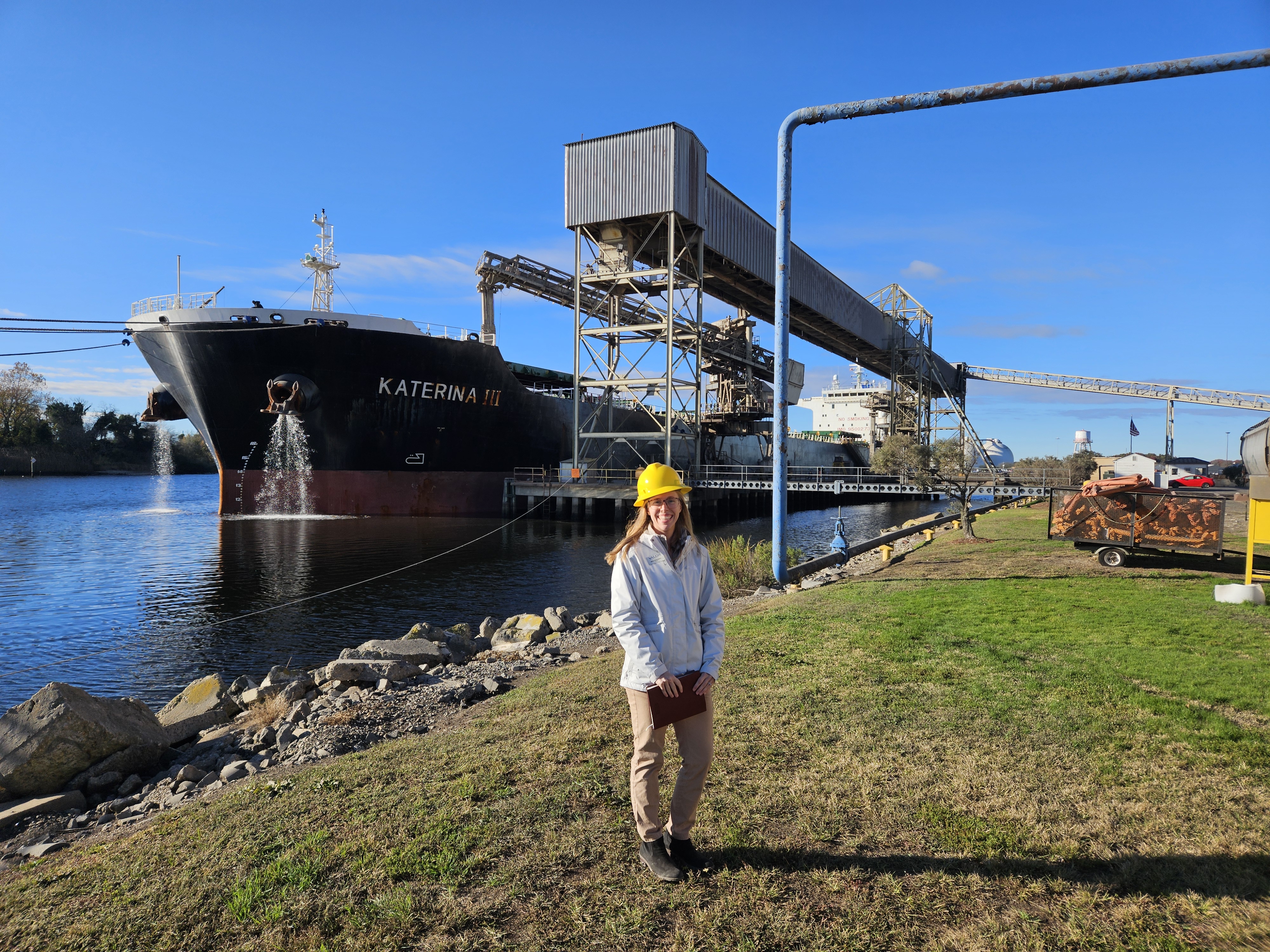
Day three we started bright and early at the Perdue Agribusiness port located on the Elizabeth River to discuss merchandising and exporting. This facility can export around 125 million bushels of soybeans annually as bulk grain or oil. We spoke about the challenges of shipping soybeans including customer needs, bridges, delay charges and of course touched on COVID and huge supply chain disruptions. I could tell Ray, Head of Merchandising, had experience with those more challenging times in the business and was able to offer leadership and guidance to the younger employees who may have just started to see their own supply chain issues and exporting seasons. Also, great leadership is when your employees show up early on a Saturday morning happy to help give a tour! A few highlights from this tour were seeing the inner workings of the control panel room and watching a barge being filled with grain. After our class left, we kept track of this barge on its journey across the Atlantic. Now, when I cross the bridges over the Elizabeth River and see the Perdue port, I have a new perspective; something that seemed mundane and hidden, I now see as another piece of the puzzle to feeding and providing for the world.
Our final few stops for this seminar took us to the Eastern Shore. The winds were not letting up, but luckily it was sunny, and we spotted a few dolphins on our trip across the Chesapeake Bay Bridge Tunnel. We stopped at Quail Cove Organics to talk all things potatoes. Mr. Jardine has been in the potato business for over 34 years, and Quail Cove supplies organic sweet potatoes for Route 11 potato chips. We spoke about soil health, with an emphasis on soil biology, and feeding the soil to feed the plants. I learned a lot about organics and the process and challenges with being certified and maintaining certification.

Our last stop was Dublin Farms, a more than 7,000-acre operation that grows row crops, but also a significant part of their rotation is dedicated to potatoes. For five weeks in July, they’re operating full tilt processing red, yellow and white potatoes. Potatoes can be sorted and shipped within a day. Since we are in the mid-Atlantic, our season works around the Carolina and northeastern potato markets. I appreciated our discussion around leadership and how farmers, from all types of operations, need a seat at the table and voice what they are seeing on the ground. Sometimes, in any industry, we get so busy with what we’re doing day-to-day that we don’t take time to relay the issues and what we’re seeing to those that influence policy, rules, decisions, etc. It was great to see leadership and authenticity in this session.
What is a trip to the Shore without a seafood dinner? We ended the evening with a delicious meal and the next morning wrapped up Session II with a really great debrief and discussion.

 valeadersor.com