


My name is Marie Schirmacher and I sometimes consider myself relatively new to agriculture. After graduating college, I was an admissions advisor for a few years. While I traveled to high schools and spoke with students, in the beginning I would ask “what do you want to do when you graduate?”. (I later realized this was not the best question to gauge what students were interested in.) This is a daunting question for any high schooler, especially for ones that were like me and had no clue what they were going to do for their career. My senior year of high school, I knew I had a passion for the environment, I loved animals, and I enjoyed science; being a veterinarian was the only thing I could think of that might come close to what I was interested in. This idea would be the jumping point for a journey- one with very many tangents- that led me to where I am today.
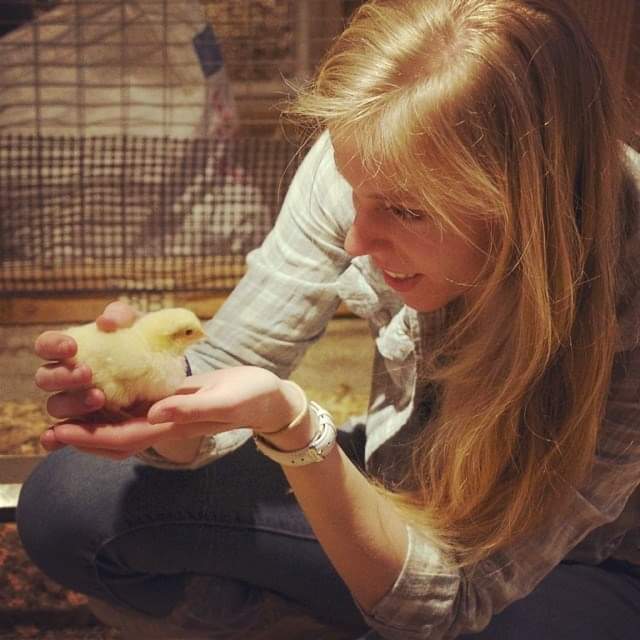
I officially began my career in agriculture at Virginia Tech in 2011. I was an Animal and Poultry Sciences major and knew absolutely nothing about livestock, horses, or chickens. Thankfully, one of my first lessons from agriculture is that if you are willing to show up and work for it, the people in this industry will help you learn and grow. Dr. Wood was my instructor for the introductory class and would later be my study abroad instructor and mentor as I TA’ed her course. As students prepare to apply for veterinary school, they are encouraged to gain hands-on experience with animals. Perfect- I will volunteer at the cattle barn or the horse barn, the more popular tracks in the major. Of course, I wasn’t to only one with this idea and all the volunteer slots were filled at every single barn- except one. The turkey barn. Not willing to risk losing hours, I reluctantly signed up to help and looking back today, it was one of the best decisions I made during school.
Lesson number two was that when you start from the basics and build up, you understand the ins and outs, the work that is put in, and gain an appreciation for every aspect of agriculture from start to finish. I went from cleaning chicken pens and feeding and watering to helping mix feed and participate in sampling days, up to running my own undergraduate research project under the guidance of Dr. McElroy. Lesson number three: the possibilities are endless in the agricultural industry. I joined such diverse clubs, I was encouraged to participate in research and volunteer in organizations, I was encouraged to travel to conferences and apply for scholarships and even pick up a second degree in Chemistry. I worked with industry-leading professors and some of the best staff who loved what they did. As my time in undergrad was coming to a close, I was still so unsure what I wanted to do as a career, so I took a unique opportunity as an admissions advisor. In those two years I stepped out of my comfort zone, gained confidence in public speaking and became travel-savvy. I took with me so many lessons that I still use to this day. I try to encourage students in similar situations to try something new, you never know where it will take you or what you’ll learn.
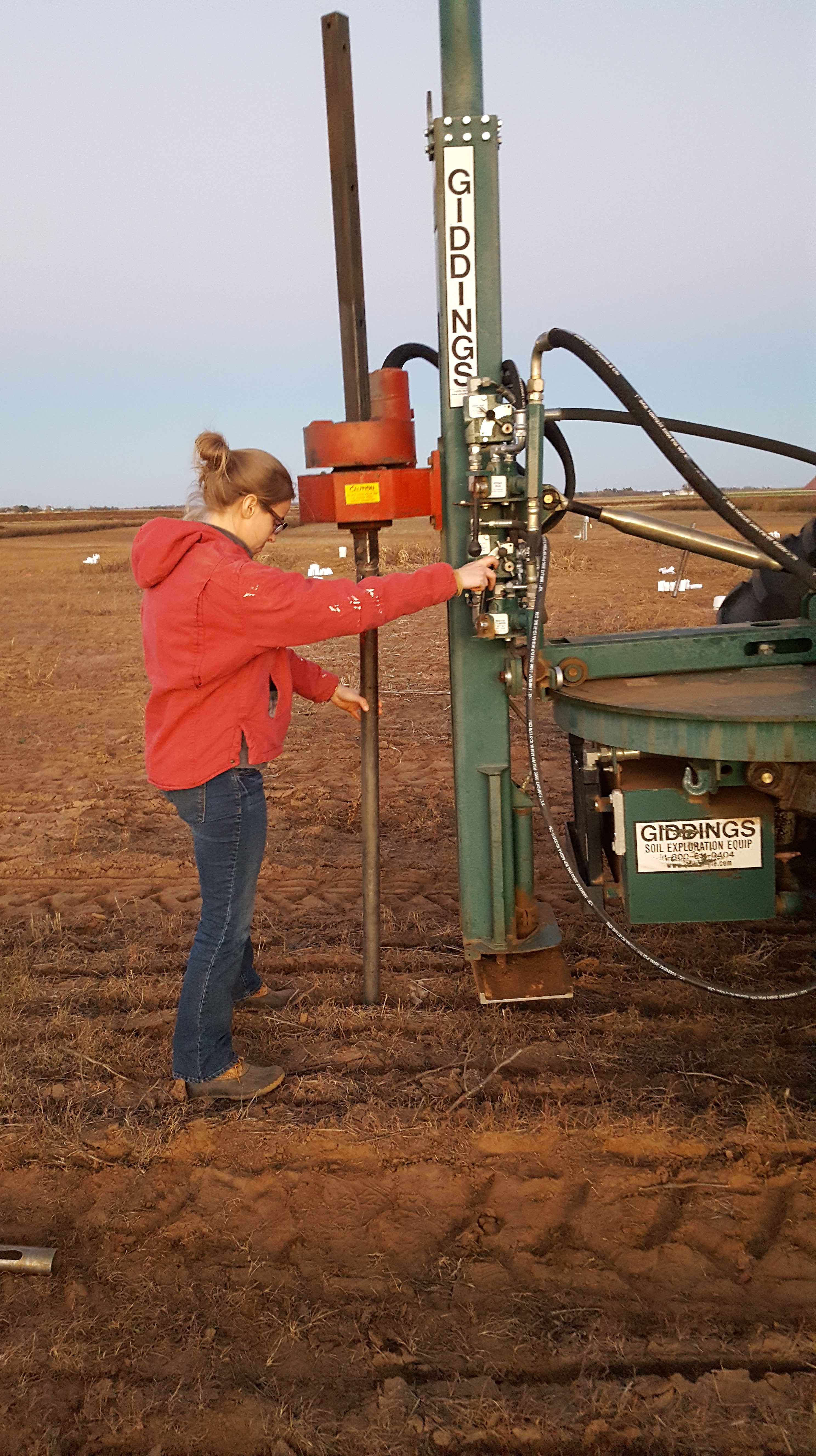
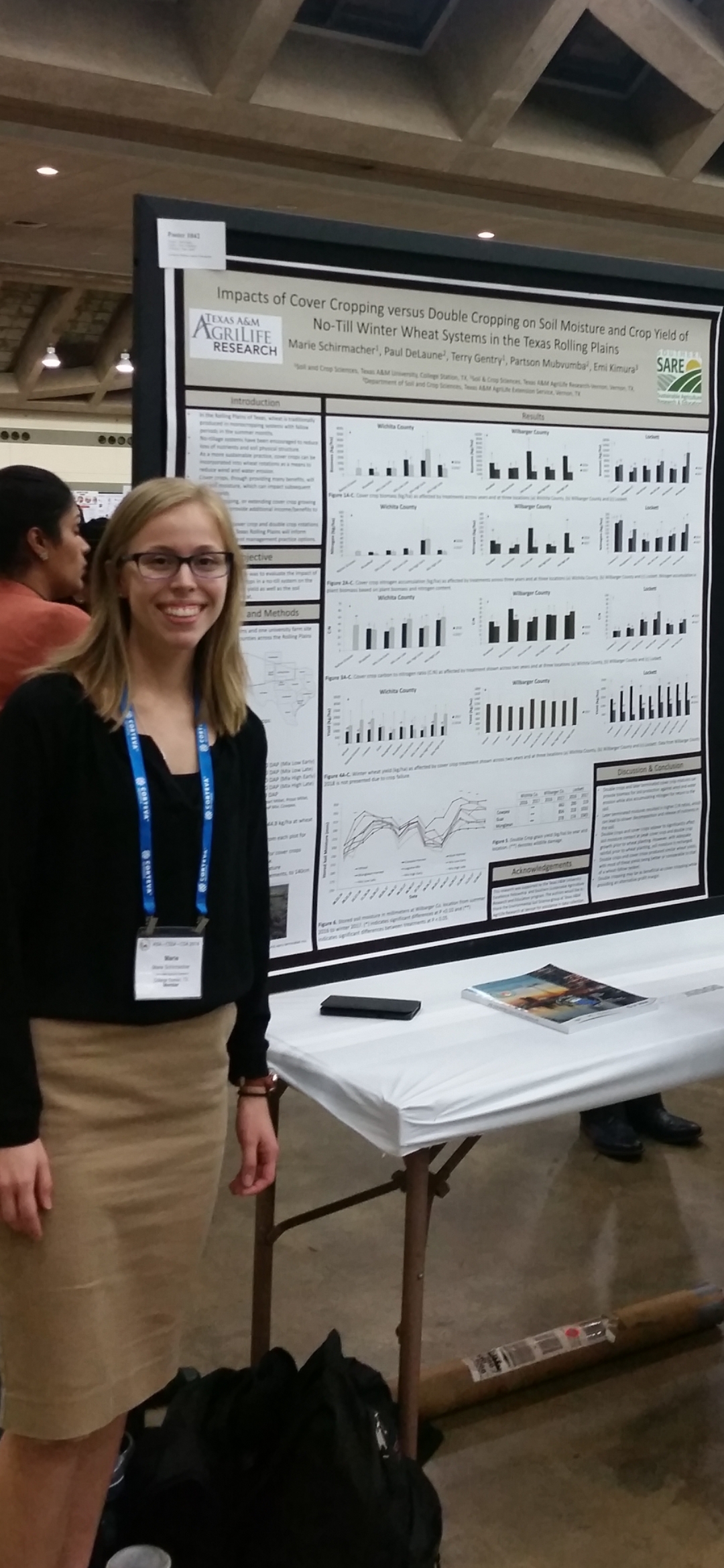
Soil sampling my graduate study research plots using a tractor-mounted probe for deep samples. Presenting my research findings at the annual international conference in San Antonio.
I started to realize that as much as I loved agriculture, I loved how it was intertwined with our environment. So, I decided to investigate programs that paired the two and the next step in my journey took me halfway across the country to Texas A&M University. There, I studied soil science (Fightin’ Texas Aggie Class of 2019), specifically looking at the use of cover crops on soil health parameters and the implementation of these in the traditional crop rotation. When I tell people I studied soil science, I’m usually met with ‘you studied dirt?!’ (a four-letter word we don’t like to use) and although it humorous, it is true. I enjoyed learning about something that may seem so abstract to many people, and at the same time is so vital to our livelihoods. During my time in Texas, I really dove into research, presented at numerous conferences and narrowed down my passions. I made my way back to Virginia, where I worked as a research technician in soil fertility and cotton agronomy at Virginia Tech Tidewater AREC, eventually finding myself to my current position as a nutrient management specialist for the Department of Conservation and Recreation.
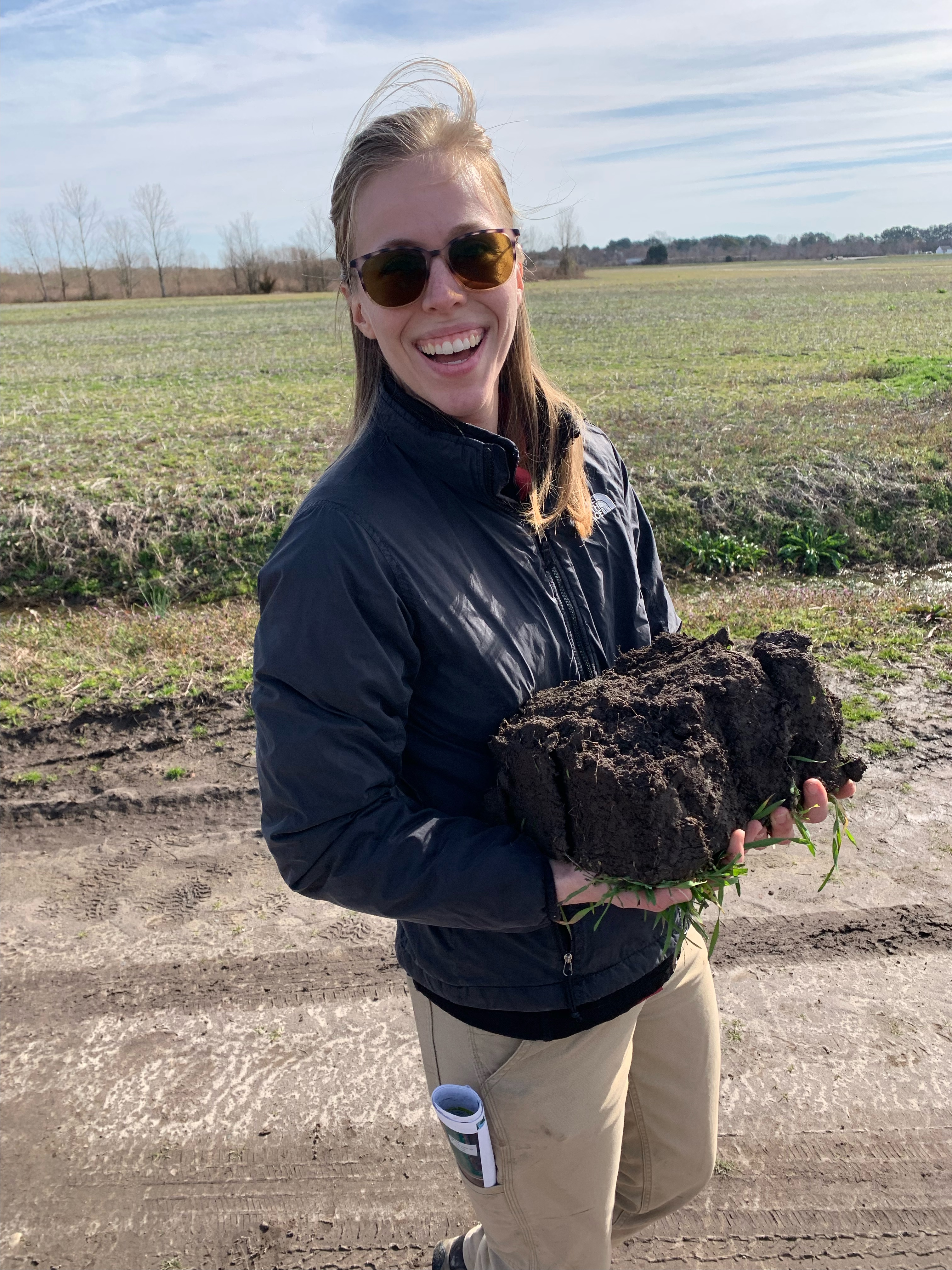
In high school, whatever path I imagined for my career is not the one I ended up on, and that has been absolutely okay for me. This journey has brought me abundant experiences, lessons and friendships that I cherish. It has allowed me to dive into my passions and combine what I want to do. The best part is the journey continues and I am excited to see where VALOR takes me and what I’ll learn from this remarkable program and the people in it.

 valeadersor.com