


Our recent class visit to Tidewater and the Eastern Shore of Virginia highlighted some decisions in our Agriculture Industry. These decisions aren’t for immediate results. Instead, they focus on the futures of the companies involved. Our visit included many amazing experiences, that a Northern Shenandoah Valley agriculturalist was amazed to see the diversity throughout our state. However, the takeaways for me rested solely on “What does the future look like?” That question had many different answers and looked very different in each of our visits, and I wanted to share a few that really stood out.

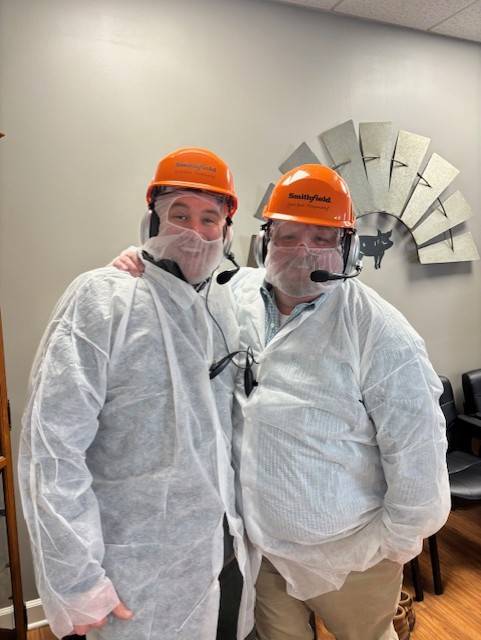
Let’s start with Smithfield Foods, a major grower, manufacturer, and distributor of pork products in the US. Their future outlook was based largely on Sustainability, Social, and Environmental Impacts. These factors affect the company’s image. They also influence growth moving forward. The presentation focused on sustainable farming techniques, water conservation, and restoration practices. It also covered social and economic impacts on new farmers. Additionally, it examined how society views the company. It also looked at their efforts to maintain and develop those business aspects. We discussed the difficulties and challenges of, such a large company, working through these efforts and the impacts of each of these. Our hosts explained the ESG report and highlighted areas of concern and opportunity.
Secondly, our visit to the Roger’s farm stood out as we discussed the future. Mr. Rogers discussed the outlook for his farm moving into the next generation. His grandson had returned to the farm recently and was showing a fond interest in making a career in production agriculture. Additionally, we discussed the extremely high input costs in cotton, peanuts, and soybeans. These costs directly impacted the profitability and future of production ag in the region.
Lastly, our trip to Dublin Farms, and our host Matt Hickman, stands out the most to me, as the struggles are extremely relatable in my own family. Seeing the decisions having to be made within a family farm when the older generations start to fade away and what the succession plan looks like. Discussing how, when the fathers and grandfathers of the farm, are no longer making the day to day decisions, who do those decisions fall to and how does the ownership, profits, and marketing get distributed. When looking at a farm family tree, there may be more or less branches on one side or the other. This type of unevenness can cause a family to have a larger ownership share. While others are left with less of the ownership pie, but still a large portion of the workload and risk. As the average age of farmers in the state continues to advance, these types of next generation questions can be very difficult to broach. However, Matt explained that through a few very tough discussions, the greater good of the operation was maintained.
We all are looking at the future of agriculture in our region, state, national, and world. How we see that future may differ greatly from person to person, or company to company. We know that our livelihood and success are based on a consumer that is more disconnected from production agriculture than ever before. With that said, the decisions we make today, will effect the population’s food and fiber for generations to come.

 valeadersor.com