

I knew we used “everything but the oink,” but peanut and cotton hay?! Those were news to me. This seminar was full of surprises but what I found most remarkable was how sustainable agriculture just “is.” Add on conversations with a fellow cohort member who works in rendering, and I wonder the marketing opportunities the community is missing out on.
Seminar II took us to the Tidewater area of Virginia. I moved to New Kent County in 2016, and that was my first experience seeing cotton. It is such a beautiful crop and I was excited to learn more about it. Being on the “edge” of Tidewater I see a lot of soybeans, very little cotton, and no peanuts or potatoes (that I know of) so the Tidewater area was a great experience.
Day one: Peanuts.
Did you know “Virginia Peanuts” is a type of peanut and does not (necessarily) mean they are grown in Virginia? MIND BLOWN. That social post went out before we left the Virginia Peanut Growers Association building. Our next stop took us to Belmont peanuts, with an adorable show room for lunch and an impressive facility. We were able to watch their process from start to finish and learn a little about marketing and sales. I think many of us had assumed (or at least I know I did) that products in Marshall’s and TJ Maxx were “second class.” Learning they sold directly to them, with their own specific label was something I did not expect to learn. On to, Birdsong Peanuts. Peanuts, peanuts, peanuts. It is hard to describe the quantity of peanuts that were at Birdsong. Even more interesting was the process farmers go through to sell peanuts. As volatile as I think of the market for ag products being, it seems peanuts are pretty “safe and profitable” crop.
Got Milk? Beef, it’s what for dinner. Peanuts sell themselves.
We wrapped up the day at the Tidewater AREC with a delicious homemade meal and great conversation. I was surprised the AREC faced many of the same challenges as Virginia farmers. With the urban sprawl competing for the same land we need for research and food production. Agriculture groups are slow to adopt communication strategies, and it is more important now than ever that we educate consumers and farmers what the agricultural community is up against.
Day two: Pork and Cotton.
We started our morning with a tour of the Smithfield Foods. I had an opportunity to tour the facility in college when it was full slaughter and processing facility. I have to admit I enjoyed that tour slightly more, but you really can’t beat bacon and pork chops so it was noteworthy to see the changes and automation through the years. The conversation from my fellow cohorts was certainly elevated from my previous tour and they had perspectives I had not thought of.
Off to the Commonwealth Cotton Gin. The fields in New Kent had been harvest weeks before we traveled to Tidewater for our seminar, so I did not expect to see fields of cotton throughout our travels, but we did! I lined my pockets with some unprocessed cotton, and it kept my hands warm throughout our tour. Being able to watch the cotton be trucked in from the field, move its way through the gin, and be re-baled for shipping was an incredible experience. Learning the history behind cotton in Virginia was just as interesting and definitely something I did not know.
Day 3: International Trade and Potatoes (sweet and regular)
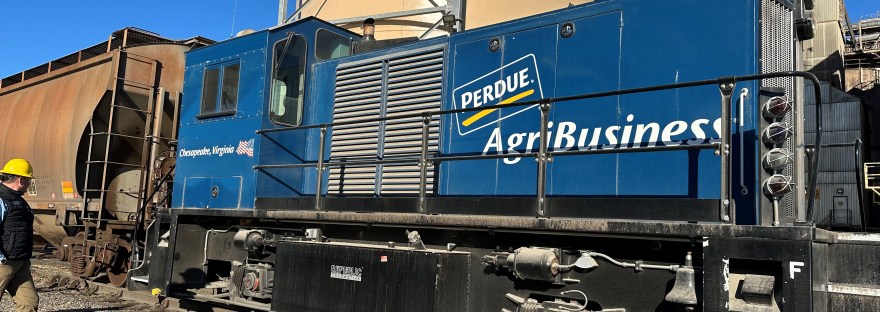
The morning kicked off with a guided tour of Perdue Agribusiness from Ray Keating and his team. VALOR VII is full of questions and there was no lull in conversation at any of our stops, especially this one. Much of our discussion at this stop focused on soybeans. Virginia produces a lot of soybeans and not all of them can be used within the state. The ship docked during our tour was headed to Italy!
“Ugly beans still make good oil.” Soybeans don’t go to waste in VA the good, the bad, and the ugly are all used for different purposes. The Perdue deep water port in Chesapeake is also soybean crushing plant. Which means they can export soybeans, soybean hull pellets, soybean (also known as vegetable) oil, and soybean meal, in addition to wheat and corn.
Fun fact: the train engine in my pictures runs off biodiesel made from the soybean processed at the port.
We visited Quail Cove Organics in Machipongo and were gifted some delicious sweet potatoes. The dark purple sweet potatoes were a VALOR VII favorite as several of us shared our take on cooking them in the group chat. The Mochipongo Trading Company was probably my favorite meal of the trip.
Dublin Farms felt like a different world (and day) from Chesapeake but was well worth the hike to Horntown, VA. Matt Hickman was our “tour guide” and gave us all the ins and outs of the farm. While they raise a variety of crops our focus was on potatoes. We covered a gamut of topics including your favorite way to eat a potato (of course), land rent, purchasing farmland, marketing, H2A labor, and farm transition. Matt carefully listened to and answered all of our questions. At one point I almost felt like we were grilling him, the more answers he gave the more questions we asked. Matt wrapped up the tour by showing off the massive equipment used to harvest the potatoes. However, the greatest showcase was his honesty, openness, and pride in their operation that exemplified the type of leader I would like to be.
Now what to do with those extra potatoes…

 valeadersor.com