


How the time flies. We are officially half-way through Cohort VII. With each seminar, we take part in an invitation to grow, to stretch our understanding of agriculture, leadership, and community. But our recent trip to Virginia’s Northern Neck reminded me of something even more personal, it reminded me to stay coachable. To keep that internal fire lit for learning. To speak less, listen more, and never believe the story is finished … there’s always another chapter to write!
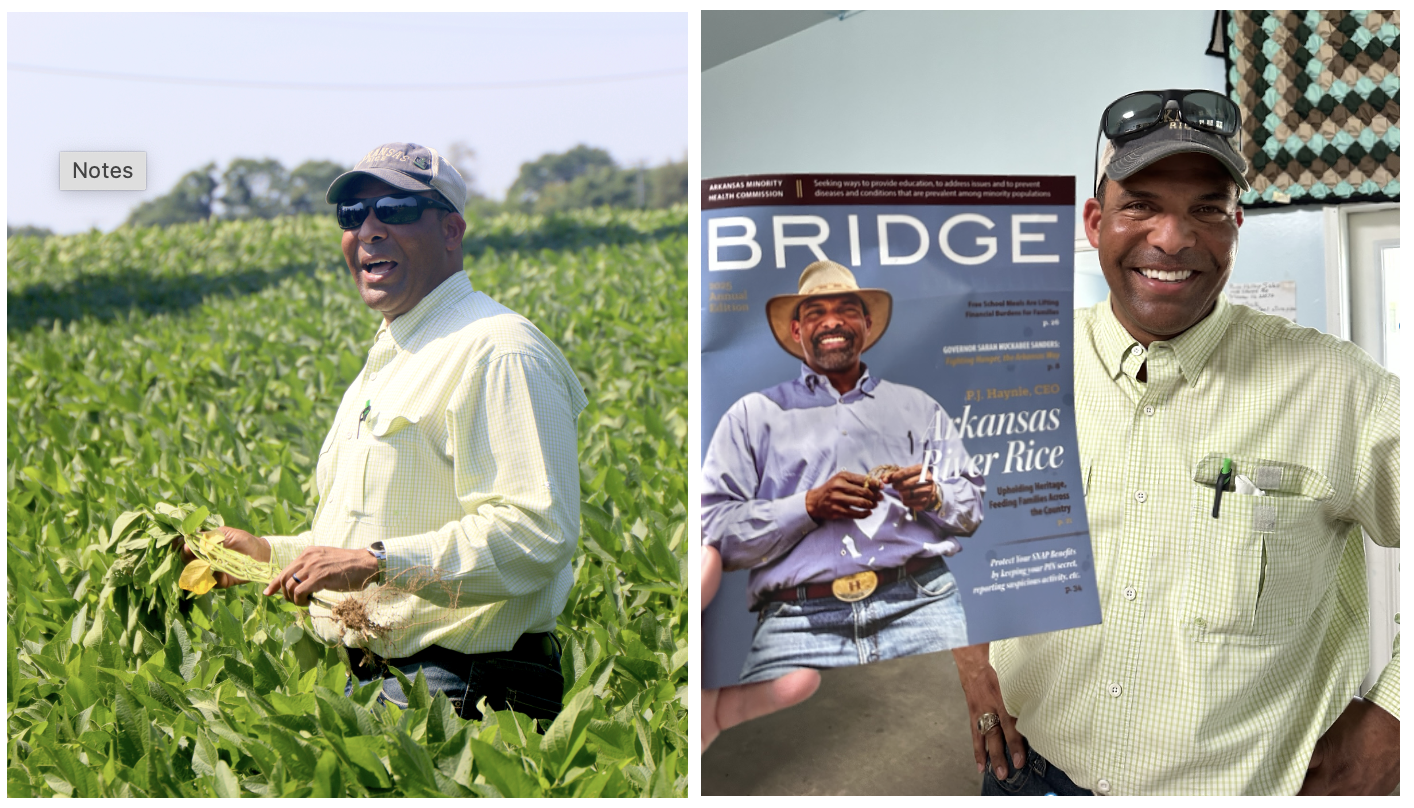
This was my first trip to the Northern Neck. It was quiet and steady but filled with movement and meaning. No part of the trip left a greater impact than our visit with Mr. P.J. Haynie and his father, Mr. Philip Haynie. Now, I’ve read about them before, seen their work mentioned in articles and on YouTube, but none of that compared to standing in a field of beans (in the blazing sun) and hearing the Haynie story firsthand.
For those who don’t know, the Haynie family has farmed in the Northern Neck for five generations. They are among the most respected farming families in America, not because anyone handed them a seat at the table, but because they built the table themselves. Their story is steeped in struggle, progress, and an unwavering love for the land, and as we stood there listening to P.J. share their journey, I felt an overwhelming sense of humility.
P.J., who now chairs the National Black Growers Council, welcomed our group with high energy and open arms. He shared stories not for applause, but for instruction. His voice carried authority, but also invitation, the kind that says, “We’re all still learning. Come walk with me.” His story absolutely grounded me. It pulled me back to something I’ve always believed but sometimes forget in the pace of day-to-day life: Real leadership starts with being teachable.
One of the most eye-opening parts of the visit was hearing P.J. talk about his expansion into the Arkansas Delta. He now leads Arkansas River Rice, one of the largest rice processing operations in the country. Thousands of acres in Pine Bluff are under his care. He’s bringing precision agriculture, advanced irrigation, and large-scale land management into areas that desperately need investment.
Listening to P.J. speak about Arkansas, it was clear this wasn’t just about business growth, it was about impact. He is using his platform to open doors that others thought were permanently shut. He is lifting others up while continuing to carry the weight of generational land and legacy. And he does it with humility. That humility hit me hard. It reminded me that I still have so much to learn, and that being coachable isn’t just a trait, it’s a discipline.

Throughout the day, our cohort asked tough questions, about policy, land access, minority farmer support, H2A guest worker programs, and what it takes to navigate a challenging system. His answers were honest, clear, and backed by lived experience. But what struck me most wasn’t just what he said, it was how he said it. There was no trace of bitterness, only resolve. There was no need to impress, only a desire to take his lessons learned, and pay them forward.
Another great story that was shared with us was about beef. P.J. walked us through a simple but powerful breakdown of the beef supply chain, and in doing so, exposed one of the biggest gaps in agriculture today. Disclaimer, the following prices are presented as an example, so give me some latitude!
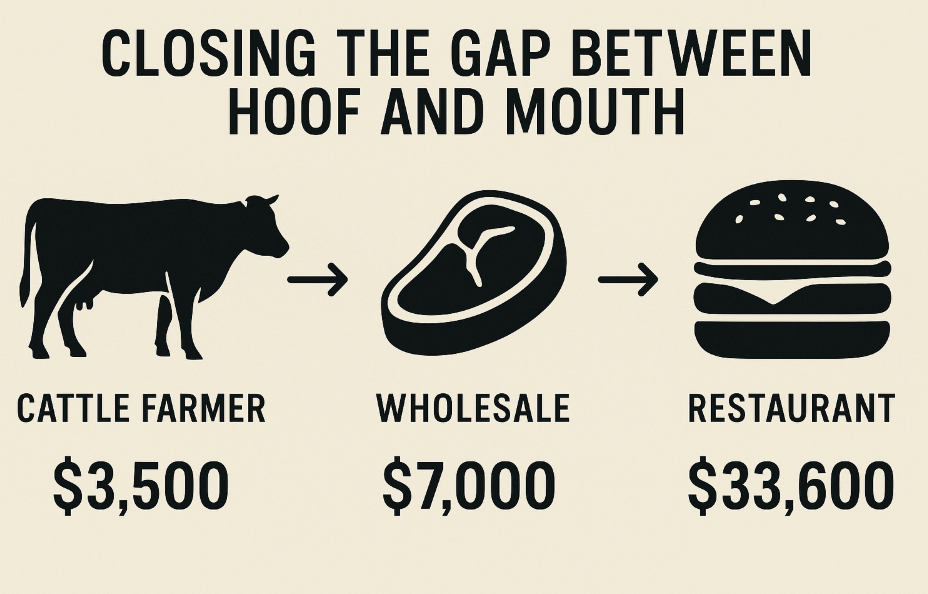
The story went like this: A cattle farmer is currently getting about $3.50 per pound on the hoof for a cow. For a 1,000-pound animal, that’s $3,500. But that same cow, once processed, dresses down to 700 pounds of meat, and sells wholesale at $10 per pound, totaling $7,000. That same beef, once it’s made it to a restaurant, sells at $12 per quarter-pound burger, which is $48 per pound or $33,600 total for the whole animal. The farmer that raised the animal, cares for the land and is feeding a nation sees only a sliver of that value. Here’s the breakdown:
- Farmer receives: $3,500
- Wholesale meat value: $7,000
- Retail/restaurant value: $33,600
- Total value created beyond the farm: $30,100
In closing, P.J. said it plainly: “We’ve got to find a way to close the gap between the hoof and the mouth.” That gap is where rural communities lose ground. And it’s where opportunity, if not reclaimed, quietly drains away.
This wasn’t just a lesson in beef economics, it was a call to action. Whether it’s investing in local processing, expanding cooperative ownership models or creating vertically integrated farm-to-table businesses, the future of agriculture must include farmers in the full value chain and a vision to grow beyond the gate.
In the end, the trip to the Northern Neck was a welcomed opportunity for a personal recalibration. The Haynie family reminded me of the power of perspective, of slowing down to listen, to stay coachable, and to keep learning. Back home in Suffolk, after a 100-degree day and a soaking summer storm, I couldn’t shake the weight of their message, what they’re building goes beyond acreage, it’s a legacy rooted in integrity, resilience, and a challenge for all of us to lead with purpose.
Here are a few links to learn more about the PJ and his operation:
- Producer of Year Finalist – LINK
- Cultivating a Legacy – LINK
- VA-AK grower captures farm dollar in a new way – LINK

 valeadersor.com