


The Oxford Dictionary defines “resilience” as the capacity to withstand or recover from difficulties. After our recent trip to Southwest Virginia, the definition of “resilience” is embodied by the people who make up this area. After being hit by one of the most devastating hurricanes to make landfall in the US in September 2024, the area was blasted by a significant and widespread ice storm in February 2025. Even after receiving that “one-two punch” in a matter of five short months, the residents, particularly the agriculturists, have shown unmatched resilience.
During our visit, I was reminded of Mike Tyson’s famous quote, “Everyone has a plan ‘til they get punched in the mouth.” Hurricane Helene was the right cross that hit the region directly on the chin, with devastating wind and flooding. Hundreds of homes and businesses were destroyed, 200,000 people were without power, and flooding and landslides even destroyed sections of major highways, not to mention the destruction to secondary and back roads.

We were told of the hundreds of miles of fencing that were lost, thousands of bales of hay that floated down the river, and farm equipment that was either swept away or left inoperative. Flood waters rose so quickly that there was no opportunity to salvage anything, apart from human life. Yet, in the face of all that destruction, the agriculture community came together from local, state, regional, and national levels to pick up the pieces, care for their neighbors, and rebuild.
Then the left hook came in February when an ice storm slammed the area with widespread damage to trees and infrastructure. Fences that were rebuilt after the hurricane were damaged again by falling trees and branches. Again, over 200,000 people were left without power and resources. However, this area is resilient, and the residents got right back up, dusted off their jeans, and went right back to rebuilding again.
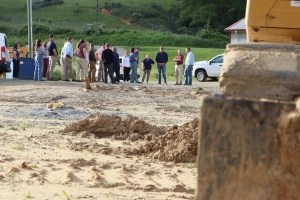
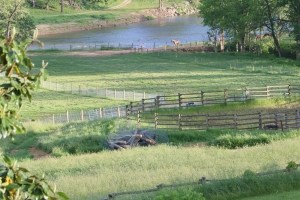
Should anyone question the resilience of this region, all you need to do is visit to see the inherent fortitude of the residents. Let me start with the folks at River Ridge Land and Cattle. Charlotte, Brantley, Whitney, and the entire team at River Ridge explained to us that the New River rose so quickly on the day of the hurricane that ankle-deep water became chest-deep in minutes. From trying to move cattle while swimming in chest-deep water to attempting to move equipment that was axle-deep, to losing hundreds of round bales in a single swipe, these farmers, who are deeply rooted in sustainable agriculture, have shown the true resolve it takes to farm 1,500 acres.
We visited the town of Damascus and the Appalachian Heritage Distillery and Brewery. We were told stories of the water in Laurel Creek, which runs through the town, rising 13 feet in mere minutes. Water rushed down Main Street as if it was a river itself. Mud, debris, and water covered the floors of most businesses in the small town. However, despite all of this damage and destruction, the town pulled up their bootstraps and worked to rebuild. Just eight months later, the town shows minimal signs of the flood. We had a roundtable discussion with a few local agriculturists, and their topics were based on building agriculture advocacy in the area, not even focusing on the damage they incurred.
Resiliency isn’t just shown by the residents of Southwest Virginia based around the flood. Toughness and a sense of community run deep in the blood of this region. Upon visiting the H.W. Meador Coal Museum in Big Stone Gap, we learned of the hardships of a coal mining town. Freddie Elkins explained how difficult the operations of a coal mine really were. However, through it all, residents fell back on their love of Appalachian music, as Tyler Hughes explained and exhibited.

Even as the coal mines started to leave the area, the State of Virginia legislated to bring prisons in to fill the employment void. Upon visiting the Wise Correctional Unit 18, we learned that even the inmates housed in Southwest Virginia are full of second, third, or even fourth chances. This facility exhibited that, even with a prison sentence, helping the community and being resilient runs strong through the residents. Through farming, gardening, orcharding, and running greenhouses, the inmates are taught the values of agriculture and instilled with the lessons of hard work. This facility provides fresh fruits and vegetables to the Virginia Correctional Institutes in the area year-round.
Tobacco was a major contributor to the agricultural landscape in the region until federal deregulation reduced income for farmers in the 1990s. Instead of giving up, farmers in the region turned to capitalizing on their experience and resources by raising vegetables. Appalachian Harvest started in 2000 to assist these farmers with marketing, packaging, and distributing these vegetables, meats, and other value-added products to eight states throughout the mid-Atlantic. Yet again, another case of stepping up to help a neighbor in need.
Lastly, a visit that really stood out to me was the resiliency of an agriculture teacher and a student headed down the wrong path. Lawrence Cox and student Andrew showed us the aquaponics system at Holston High School. However, the story was much deeper than just the tilapia and the lettuce. Mr. Cox told the story of Andrew missing significant days over the past few years, to the point that he was put on the chronically absent list. Andrew’s only saving grace was the agriculture department and Mr. Cox. Through resilience and a little “tough love,” Andrew has taken over as the greenhouse manager, giving tours, meeting dignitaries, and managing the aquaponics system.

Resilience takes on many forms and might look different depending on the audience. However, I am quite confident that the residents of the southwest portion of the state of Virginia are the true definition of the word. From a one-two punch of weather to losing two major economic industries to the rehabilitation of one’s own persona; resilience is the underlying factor in each and every story. I think Robert H. Schuller put it best, “Tough times never last, but tough people do.”

 valeadersor.com